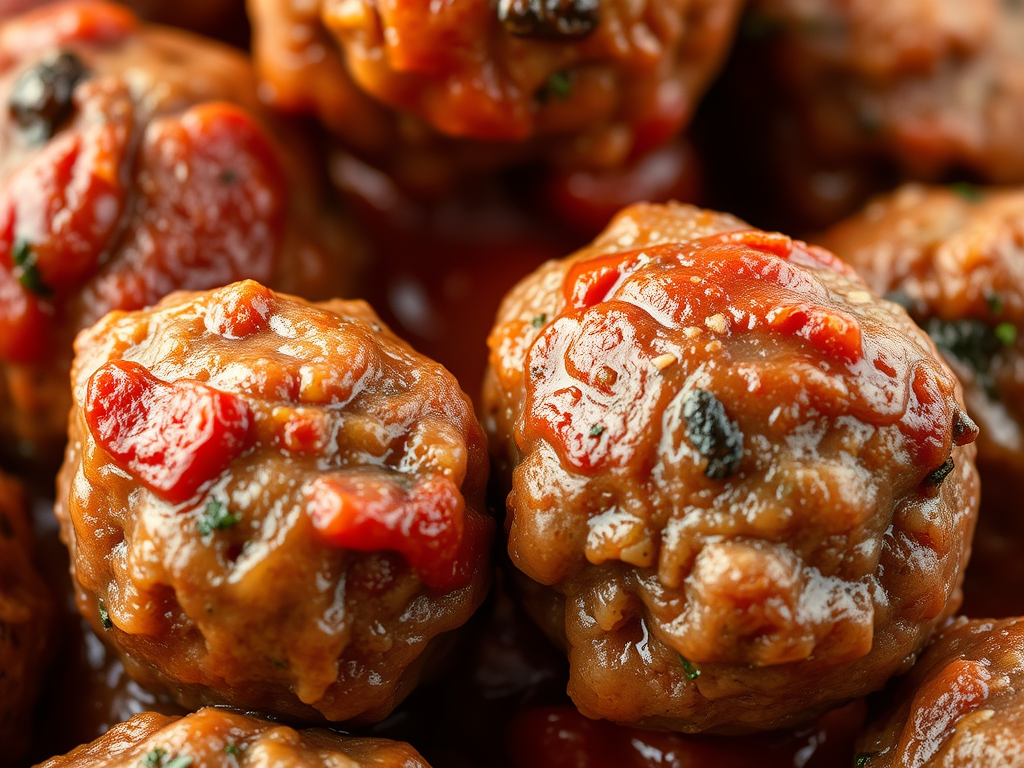
The humble meatball, its beginnings tell early meatballs would have been made from leftover meat dishes and hand-shredded or pounded with a heavy object and minced with primitive tools. Food history tells us that meat was rare across the world and was enjoyed mostly by the rich. It was precious, so it can be assumed that it was never wasted, and no parts of a cut of meat or the leftovers would have been thrown away. Simply put, the meatball was a way to utilize this extraneous meat and squeeze another days’ meal from it, not to mention another days’ nutrition.
Italian immigrants brought along their own meatball (polpette) recipes, many of which had evolved according to family tradition. The polpette were not initially served with spaghetti. Spaghetti was typically served alone. The two forces came together in order to appease Americans who frequented Italian restaurants and wanted meat served alongside their pasta dishes.
The meatball was recorded in a 1754 Swedish cookbook by Cajsa Warg. The k”ttbullar were served with a cream-based gravy and loganberry preserves. Buttered noodles also became a popular side item, and nowadays are thought of as the expected accompaniment for Swedish meatballs.
There are meatball recipes from 25 AD. The Romans, as evidenced in an ancient recipe book written by Marcus Gavius Apicus (aka Apicius) called “De re coquinaria libri decem (Cuisine in Ten Books)”. Book II is devoted to “minces”, or mixtures of meat and other ingredients.
So to conclude, where did the first meatball come from? No one knows for sure. Every country has their own version of the meatball dating back in time throughout history using different meats, vegetables, and ingredients.
This is Kitchen Moxy’s version, I hope you enjoy these little morsels as they are a favorite of mine served with traditional spaghetti sauce or brown gravy. In this day and age we are all trying to watch our nutrition, fat, and calorie intake. Beef can be substituted with veal, venison, elk, which ever red meat you desire. The pork adds moisture and flavor, so your meatball does not end up dry. Eat well and rejoice.
- ½ pound of ground pork
- ½ pound of veal (or other meat)
- ½ pound of beef chuck (or other meat)
- ½ cup of grated Parmesan cheese
- ¼ cup finely chopped flat-leaf Italian parsley
- 2 teaspoons of kosher or sea salt
- ¼ to ½ cup of grated onion (food processor works great)
- 3 cloves of grated garlic
- 1 large beaten egg
- ¼ teaspoon black pepper
- 1/3 cup olive oil for frying. See methods of cooking below
- 1 cup of breadcrumbs, if using seasoned, dry breadcrumbs toss with 1/3 cup of milk to re-hydrate.
Directions:
-
Mix all ingredients together with your hands just until the mixture comes together.
-
Form meatballs with your hands, rolling into golf-ball sized balls. Do not pack the meat into tight balls or they will become tough.
-
May be refrigerated up to 24 hours at this point.
Cooking Methods:
Method #1: Drop raw meatballs into your sauce. By the time your sauce is finished cooking, your meatball will be too. This is the easiest way, no prep, no mess. But no crusted sides. But it does flavor the sauce. Both my mom and I used this method many times. We were making our own marinara sauce from scratch. So cook time was long enough to cook the meat.
Method #2: Bake your raw meatballs in the oven at 350F. for 15 minutes. Your meatballs are done when no longer pink in the center. The internal temperature of a meatball should be 160F. You can finish cooking your pink centered meatball in your sauce.
Method #3: Fry your meatballs in olive oil. This is the traditional method. Your meatballs are crusted on all sides as they simmer in hot oil. Heat two tablespoons of olive oil in a non-stick skillet over medium-high heat. Add half of the meatballs and cook, turning occasionally, until well browned on all sides, about 6 minutes. Transfer the meatballs to a plate. Drain the oil and wipe out the skillet, return to the heat, and repeat with the remaining oil and meatballs.
Notes:
- Great meatballs contain Parmesan cheese! Freshly grated Parmesan cheese is tasty, but you can use any hard Italian cheese like Grano Padano, or Pecorino Romano.
- Fresh Parsley: Use fresh parsley either Italian parsley or common parsley. Use a food processor to mince fine or mince your parsley the old-fashioned way with a chef’s knife. But do not skimp on the parsley
- Garlic: You need to smell the garlic in the meat! Use fresh garlic use a press, mince, or grate. Do not skip the garlic. You can also add a teaspoon of garlic powder with your fresh garlic.
- Onions: Do not skip the onions! They add so much flavor. You can use either Yellow, white or sweet onion. they all add a different note of flavor.
- Be sure to rehydrate your breadcrumbs before adding to the meat mixture. Add 1/3 cup of milk to 1 cup of breadcrumbs. Let sit for about 5 minutes.
- Meat: I find that using 85% lean ground beef is the perfect amount of fat. If you do not eat beef, you can substitute ground turkey, ground chicken, venison, or veal. You can also add Italian sausage to the mix for a different flavor note.

 Kitchen Moxy