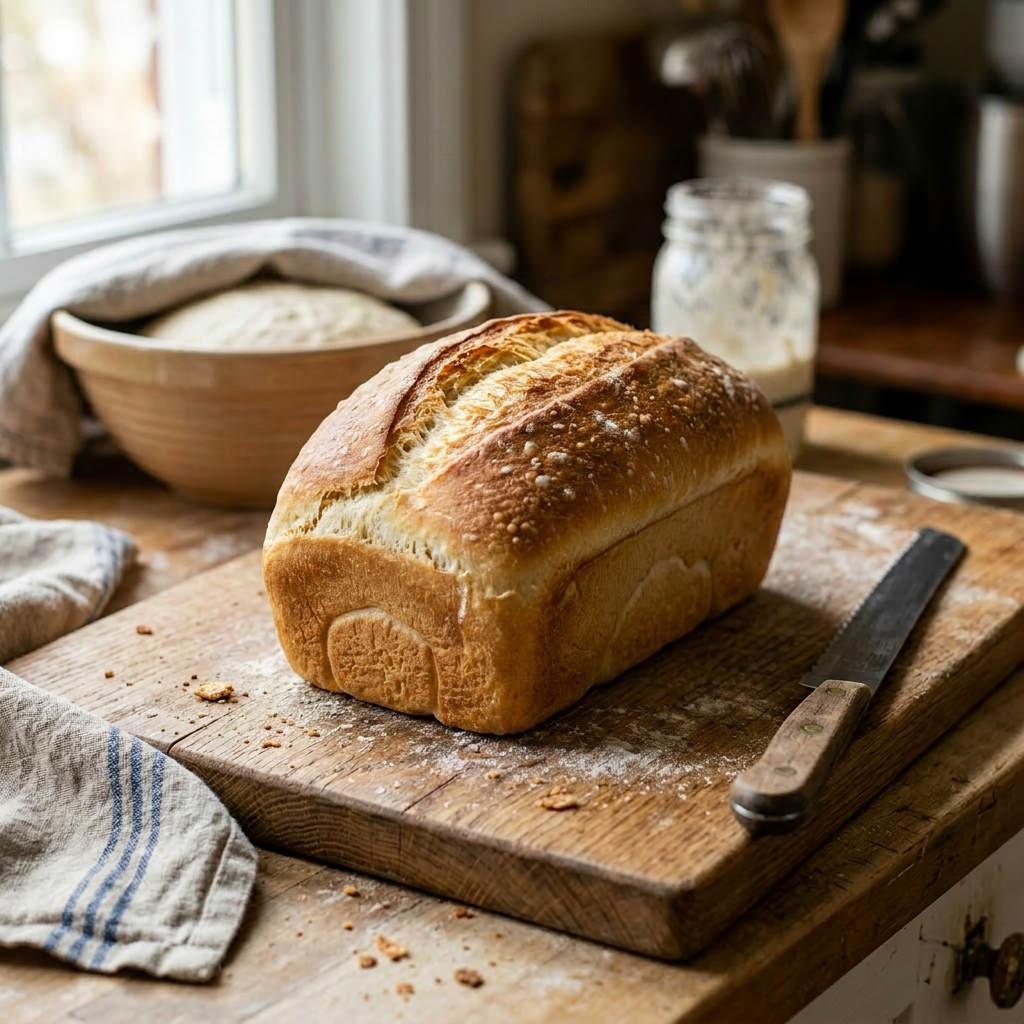
Sourdough bread undergoes fermentation, which produces lactic acid, giving it a tangy flavor. Traditional sourdough has a chewy texture, large air pockets, and a crusty outside, distinguishing it from bread made with commercial yeast. However, this recipe combines sourdough starter with commercial yeast, resulting in a softer, lighter bread similar to sandwich bread. It lacks the chewy interior and crusty crust typical of traditional sourdough. Many consider sourdough healthier because fermentation helps break down gluten and complex carbs, making the bread easier to digest. This process may also support blood sugar regulation, offering additional health benefits. Overall, this version provides a milder, softer bread while retaining some health advantages of traditional sourdough.
Ingredients
- 1 cup of Sourdough Starter, see previous post
- 5 ½ cups of bread flour
- 1 package active dry yeast
- 1 ½ cups warm water
- 3 tablespoons of sugar
- 3 tablespoons of butter
- 1 ½ teaspoons of salt
- ½ teaspoon baking soda
Process
- Measure Sourdough Starter; let stand at room temperature for 30 minutes.
- Combine 2½ cups of bread flour and the dry yeast in a large mixing bowl. Set aside.
- Heat water to 120°F, then add sugar, butter, and salt. When the butter nearly melts, pour the liquids into the flour and yeast mixture, then add 1 cup of Sourdough Starter.
- Use a dough hook on a stand mixer. Mix at low speed for 30 seconds, then scrape the sides of the bowl. Increase the speed to high and beat for 3 minutes.
- Combine the remaining 2½ cups of flour and baking soda, and add to the yeast mixture. Stir until combined. If using a mixer with a dough hook, mix for about 5 minutes until smooth and elastic.
- If not using a stand mixer with a dough hook, turn the dough out onto a floured surface and knead for 6 to 8 minutes until smooth and elastic.
- Grease a big bowl with butter or shortening. Make the dough into a ball and put it in the bowl. Turn the dough over once to coat it with butter or shortening.
- Cover the bowl with plastic wrap and place it in a warm spot to rise for 60 minutes.
- After 60 minutes, punch the dough down with your fist and turn the dough out onto a floured surface.
- Cut the dough into two pieces, cover with plastic wrap, and let rest for 10 minutes.
- Line two baking sheets with parchment paper. After resting for 10 minutes, place the dough halves onto the baking sheet and shape them into a ball by tucking the edges under.
- Alternatively, place the dough into two greased bread loaf pans.
- Using a sharp knife, make slashes across the tops of the loaves. Cover and let rise in a warm place until doubled for 30 minutes.
- Preheat oven to 375°F. and bake for 30 – 35 minutes or until bread sounds hollow when lightly tapped.
- Remove from oven and place on wire racks to cool before slicing.
- If using bread loaf pans, remove bread from pans and cool on a cooling rack.
Note:
Keep your sourdough loaf in a paper bag, linen bread bag, or bread box to maintain crust crispness and soft crumb. Avoid airtight plastic bags at room temperature, as they trap moisture and can soften the crust or promote mold growth.
Tagged: baking, Bread, Food, recipes, sandwich bread, sourdough, sourdough bread


Leave a Reply