Tag Archives: recipes

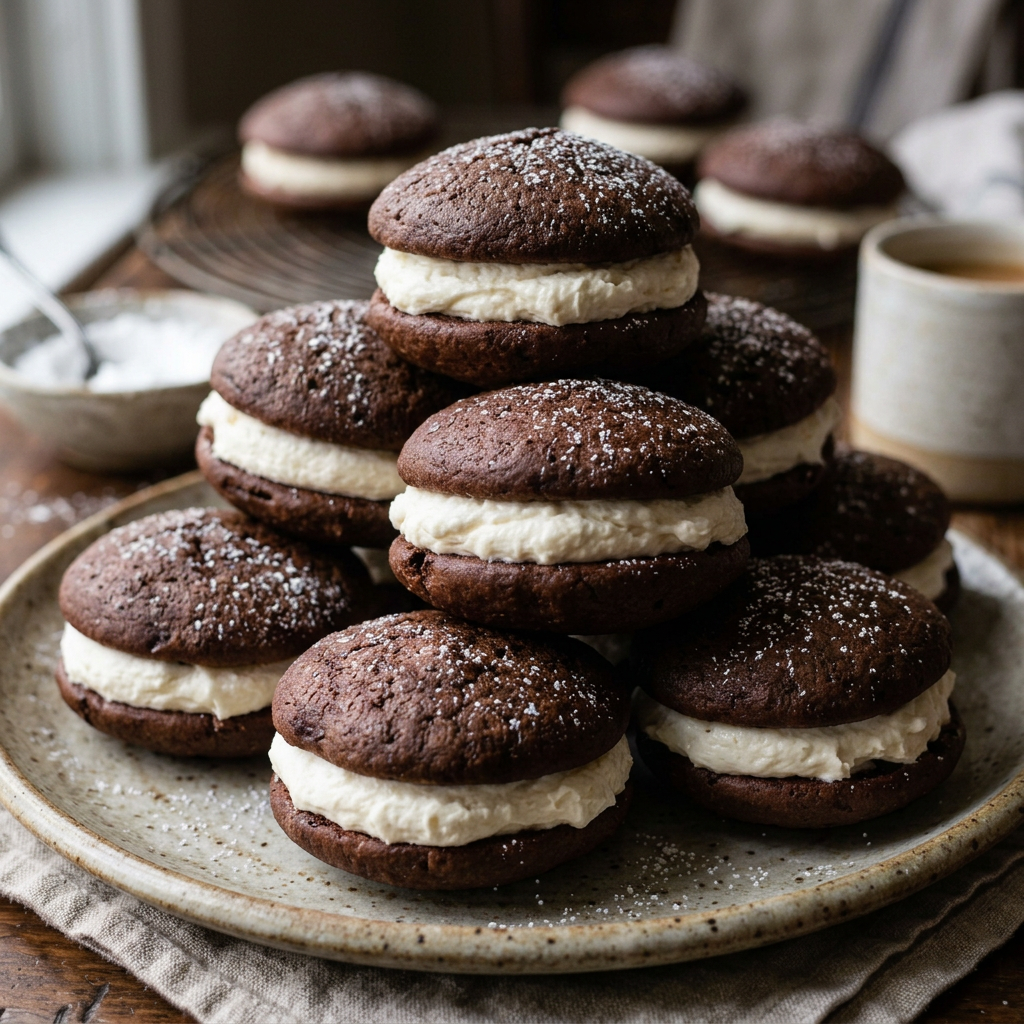
Whoopie for Dutch Country Chocolate Cream Pies

Stack of chocolate whoopie pies with cream filling beside coffee
Old Fashioned chocolate whoopie pies

A soft cocoa sandwich cookie with sweet farmhouse charm and a cloud of creamy filling. Meet the Pennsylvania Dutch Whoopie Pie: part cookie, part cake, and an all-out happy little sandwich of chocolatey goodness. Born from the practical magic of Amish and Pennsylvania German kitchens, these soft cocoa rounds hug a cloud of sweet, creamy filling that feels like a farmhouse celebration in every bite. Tuck one into a lunch pail, pass a plate at the picnic table, or enjoy it with a cold glass of milk—and don’t be surprised if the first taste makes you want to shout, “Whoopie!”

Ingredients

  • 1 cup sugar
  • ½ cup shortening
  • 1 egg
  • 1 egg yolk
  • 2 cups all-purpose flour
  • 2/3 cup unsweetened cocoa powder
  • ¼ teaspoon salt
  • 1 teaspoon baking soda
  • ½ cup hot water
  • 2/3 cup buttermilk

Process

  1. Preheat oven to 350°F. Line 2 cookie sheets with parchment paper.
  2. Beat together sugar and ½ cup shortening at high speed with a stand mixer until fluffy.
  3. Add the egg and egg yolk and beat until incorporated.
  4. In a separate bowl, stir together the flour, cocoa powder, and salt; set aside.
  5. Dissolve baking soda in the ½ cup of hot water; cool slightly.
  6. Add the flour mixture, baking soda mixture, and 2/3 cup buttermilk alternately to the sugar-shortening mixture.
  7. Beat at a medium speed until well mixed.
  8. Drop batter by rounded tablespoonfuls 2 inches apart onto a parchment paper-lined cookie sheet. Bake for 8 – 10 minutes.
  9. Cool cookies on a cookie rack. Yields 48 cookies.

Filling Ingredients

  • 2 cups sifted powdered sugar
  • ½ teaspoon of meringue powder
  • 1 teaspoon vanilla
  • ½ cup shortening (such as white Crisco)
  • ¼ cup butter

Process

  1. In a stand mixer, combine the shortening, butter, vanilla, and 1 teaspoon water; beat on high speed until light and fluffy.
  2. Turn mixer to low and gradually add powdered sugar and meringue powder.
  3. Beat on high until mixture is light and fluffy. If the mixture is too thick to spread, add 1 teaspoon of water at a time until it is spreading consistency.
  4. Spread some filling on the flat side of half the cookies; top with the remaining cookies, flat side down.
  5. Store in the refrigerator.

09/04/2026

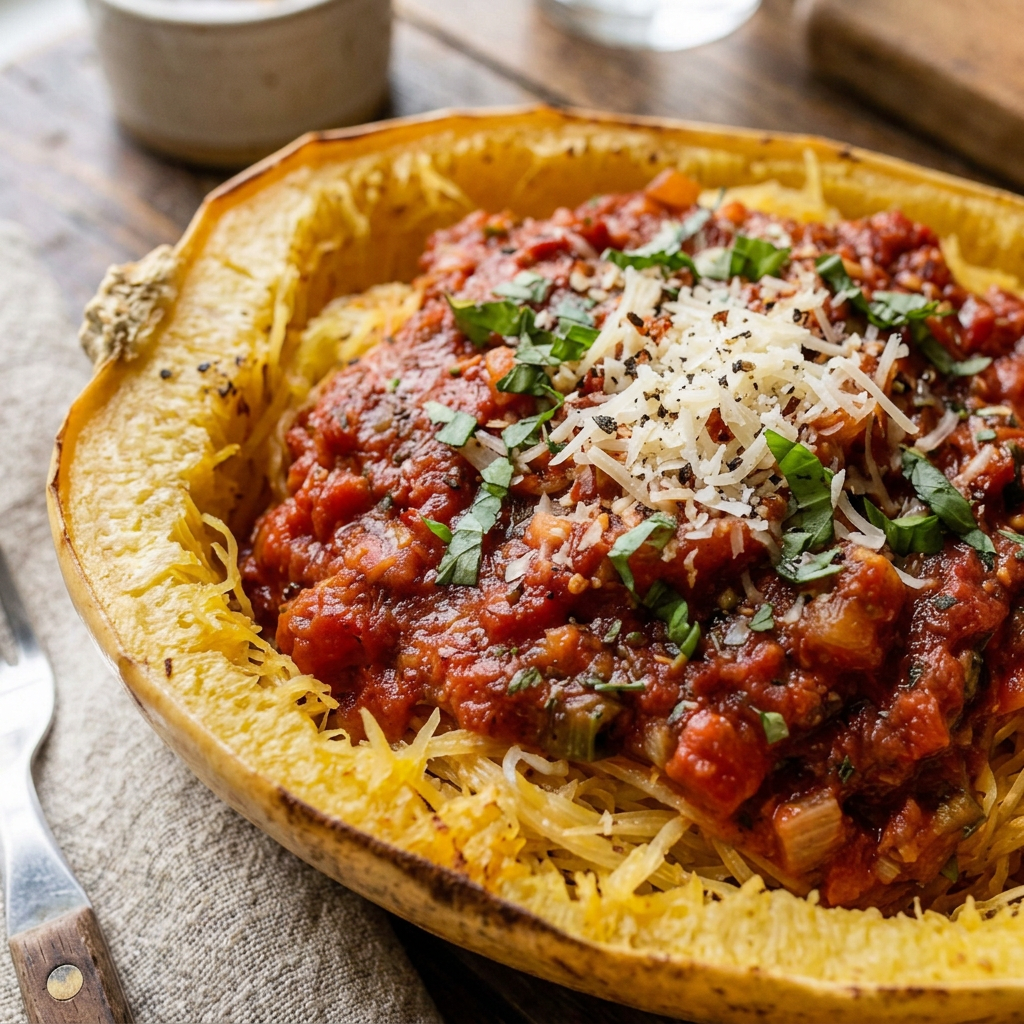
Spaghetti Squash

Spaghetti squash topped with tomato sauce, herbs, and grated Parmesan
Spaghetti squash strands topped with hearty tomato sauce, herbs, and Parmesan create a comforting homemade meal.

Spaghetti squash is the vegetable that shows up to dinner wearing golden strands and a surprisingly pasta-like personality. Once cooked, its tender flesh pulls apart into delicate ribbons, creating a lighter alternative to traditional noodles. The flavor is mild and gently sweet, so it happily teams up with roasted garlic, olive oil, tomato sauce, fresh herbs, sautéed vegetables, or a generous sprinkle of cheese.

Ingredients

  • 1 large spaghetti squash
  • 2 tablespoons of olive oil
  • 1 large Roma tomato, finely chopped
  • 2 tablespoons of fresh basil
  • ¼ cup shredded mozzarella or parmesan cheese
  • 1 teaspoon each coarse salt and pepper
  • 1 teaspoon garlic powder

Process

  1. Preheat oven to 400°F.
  2.  Wash the squash thoroughly under running water to remove dirt. Pat it dry.
  3. Pierce the squash with a knife or fork. Microwave it on high for 4 minutes. Let it rest for 2 minutes.
  4. Place the squash on a towel to keep it steady. If cutting it lengthwise, cut off the stem end first. Then use a very sharp knife to cut the squash in half lengthwise.
  5. Use a fork to remove the seeds and center strings.
  6. Drizzle the inside of the two halves with olive oil, using your hands or a brush to ensure all surfaces are coated.
  7. Sprinkle the coarse salt, pepper, and garlic powder all over the inside surface of the squash.
  8. Place the squash cut-side down in an oven-safe dish or pan.
  9. Bake in a preheated oven for 40 – 50 minutes or until the squash is soft and the strands pull up easily with a fork.
  10. Remove from the oven and fluff the squash with a fork, pulling the strands away from the sides – leave squash in shell.
  11. Turn oven onto broil
  12. Add the tomatoes and fresh basil to the fluffed squash and sprinkle each half with the cheese.
  13. Place under broiler for 3 to 4 minutes or until the cheese is melted and lightly browned.

Caprese Eggs Benedict

Two servings of eggs Benedict with tomatoes, basil, orange juice, and coffee
Eggs Benedict with fresh tomatoes and basil

Ingredients

  • 1 tablespoon of white vinegar
  • 1 ounce of mozzarella cheese, sliced into 4 pieces
  • 2 English muffins, split
  • 4 large eggs
  • 4 teaspoons of pesto
  • Salt to taste

Process

  1. Fill a large saucepan with 3 inches of water. Bring it to a boil over high heat. Reduce the heat to medium-low, pour in the vinegar, and maintain a gentle simmer.
  2. Preheat oven to 350°F.
  3. Split each English muffin horizontally using a fork to preserve the nooks and crannies.
  4. Spread a thin layer of butter over each English muffin half. Add one slice of mozzarella and one slice of tomato to each half.
  5. Cook in the oven until the cheese softens and the English muffin has toasted.
  6. Crack an egg into a small bowl. Holding the bowl just above the simmering water’s surface, gently slip the egg into the water. Repeat with the remaining eggs.
  7. Simmer the eggs for about 3½ minutes, until the whites are firm and the yolks are thickened but still soft.
  8. Use a slotted spoon to remove the eggs from the water, then place them on a paper towel to drain.
  9. Place a poached egg on top of each English muffin. Spoon 1 teaspoon of pesto sauce onto each and sprinkle with salt.
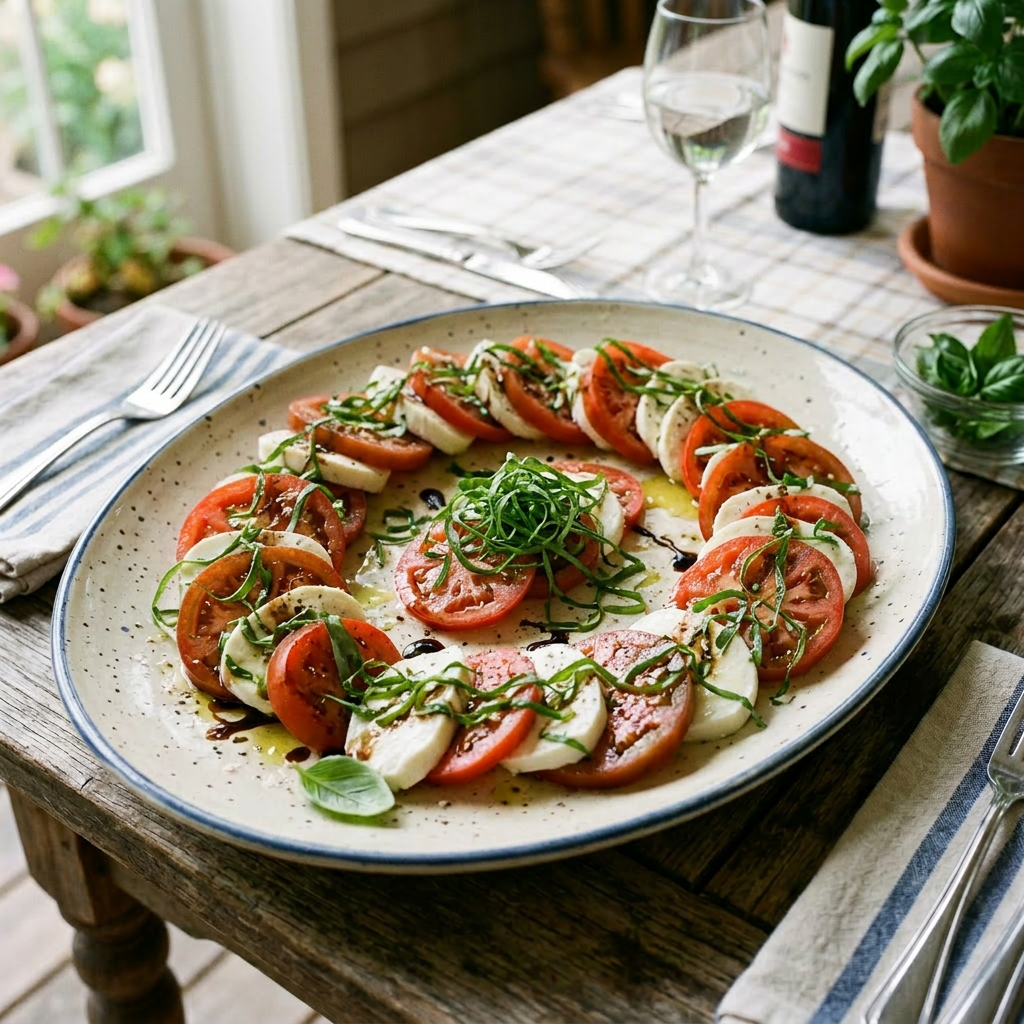
Caprese Salad

Cut basil leaves into thin ribbons

Caprese salad celebrates simplicity with ingredients at their peak. Arrange juicy tomatoes and fresh mozzarella on a platter, then scatter fragrant fresh basil ribbons across the top. Finish with a drizzle of extra-virgin olive oil, aged balsamic, flaky sea salt, and freshly cracked pepper. For a gourmet touch, add toasted pine nuts or a delicate basil oil. Serve immediately with crusty artisan bread, allowing the creamy cheese, sweet tomatoes, and aromatic basil to shine in every elegant bite.

Ingredients

  • Fresh spinach or arugula
  • 4 medium-sized juicy, ripe tomatoes, sliced in ¼ inch slices
  • 6 ounces of fresh mozzarella cheese, sliced
  • 1 bunch of fresh basil, rinsed and pulled apart into individual leaves

Process

Remove the basil leaves from the stems. To slice basil into thin ribbons, a technique known as chiffonade, begin by selecting fresh, clean basil leaves.

  • Stack several basil leaves on top of one another, placing the largest leaf on the bottom.
  • Roll the stack tightly from one side to the other, forming a small cylinder.
  • Hold the roll firmly with one hand, keeping your fingers curled safely away from the knife.
  • Using a sharp chef’s knife, make thin, even slices across the rolled basil. Aim for ribbons approximately 2 to 3 millimeters wide.
  • Separate the slices gently with your fingers and scatter the basil ribbons over the finished dish.
  1. Line a plate or platter with washed spinach leaves, stems removed.
  2. Arrange the tomato slices on top of the spinach.
  3. Sprinkle with ½ teaspoon of kosher or sea salt.
  4. Layer half of the basil ribbons on top of the tomatoes.
  5. Layer the mozzarella cheese on top of the basil.
  6. Garnish with remaining basil ribbons.
  7. Drizzle balsamic vinaigrette evenly over the layered ingredients for clearer, more consistent coverage.
  8. Serve at room temperature.

Balsamic Vinegarette

  • 2 tablespoons of olive oil.
  • 2 Tablespoons of good balsamic vinegar
  • 2 cloves of garlic, sliced into slivers or grated
  • ½ teaspoon of cracked pepper
  • 1 teaspoon Kosher or Sea salt, divided

In a small bowl with a lid, mix the olive oil, balsamic vinegar, ½ teaspoon cracked pepper, ½ teaspoon salt, and garlic. Let the mixture sit for at least 15 minutes to blend the flavors.

Cabbage Rolls (Golabki)

Stuffed cabbage rolls topped with tomato sauce and herbs in a serving dish
Stuffed cabbage rolls with tomato sauce

Call them old-fashioned if you like, but stuffed cabbage rolls are comfort food with a playful twist. Once you master the roll, the kitchen becomes your playground: swap beef for turkey, trade rice for barley, or tuck in a surprising filling. The cabbage leaf is your edible envelope, ready for delicious secrets. Polish Golabki, like the ones my mom made, combine seasoned ground beef and pork with rice, then bake in a savory tomato sauce until tender and fragrant. Some versions add barley, a spoonful of sour cream, or extra herbs. Every roll feels like a warm hug from another culture—simple, cozy, and wonderfully adaptable.

Ingredients

  • 1 medium head cabbage (3 pounds)
  • 1/2-pound uncooked ground beef
  • 1/2-pound uncooked ground pork
  • 1 egg, beaten
  • 1 can (15 ounces) tomato sauce, divided
  • 1 small onion, chopped
  • 1/2 cup cooked long grain rice (See Note)
  • 3 tablespoons fresh parsley, minced
  • 1/2 teaspoon salt
  • 1/2 teaspoon of dill weed (or marjoram)
  • 1/8 teaspoon cayenne pepper
  • 1 can (14-1/2 ounces) diced tomatoes, undrained or your favorite marinara sauce

Process

  1. Preheat oven to 350°F.
  2. Boil a whole head of cabbage until the outer leaves loosen and can be easily removed from the core.
  3. Set aside 12 large leaves for rolls. Cut out the thick vein from the bottom of each leaf, making a V-shaped cut.
  4. In a small bowl, combine the beef, pork, 1/2 cup tomato sauce, egg, onion, rice, parsley, salt, dill, and cayenne; mix well.
  5. Place about 1/4 cup of the meat mixture on a cabbage leaf. Fold the leaf sides over the filling, then roll from the cut end until sealed. Repeat with remaining leaves and filling.
  6. Slice the remaining cabbage; place in a Dutch oven. Place the cabbage rolls seam-side down on the sliced cabbage.
  7. Combine the canned tomatoes and remaining tomato sauce; pour over the rolls. Cover and bake until cabbage rolls are tender, about 1-1/2 hours.

Note: Use precooked rice or another cooked grain (for example, barley, farro, or lentils).

Crab stuffed Flounder

Stuffed fish on a plate with lemon, potatoes, asparagus, and a pitcher of lemon water on a wooden table by the ocean

Bring sunshine to the table with a playful, crowd-pleasing dish that’s perfect for summer get-togethers: crab stuffed flounder. Imagine delicate flounder fillets gently wrapped around a savory, herbed crab filling that’s bright with lemon, kissed by garlic, and uplifted with fresh herbs. Each bite offers tender, flaky fish paired with sweet lump crab—light enough for warm evenings, yet hearty enough to satisfy a hungry crowd. Whether you’re feeding a small group or a boisterous crowd, crab-stuffed flounder brings coastal charm, bright flavors, and a touch of summer whimsy to every gathering.

Stuffing Options

  • Pocket method: Sprinkle flounder with salt and pepper. Using a fillet knife, carefully open the flounder by cutting along the left and right sides of the seam, down the middle of the fish, to create pockets. Lay the cut sides back.
  • Roll method: Place stuffing into a strip of fillet, roll it up, and secure with toothpicks or skewers.
  • Layer method: Place stuffing into a cavity or between two fillets, then cook.

Ingredients

  • 2 green onions, thinly sliced (about 1/4 cup)
  • 1 clove garlic, minced
  • 1 red pepper, minced
  • 2 tablespoons fresh parsley, chopped fine
  • 1 egg
  • 1/8 teaspoon cayenne pepper
  • 1/8 teaspoon garlic powder
  • 3 tablespoons heavy cream
  • 1 1/2 tablespoons Dijon mustard
  • 1/2 lemon, juiced
  • 2 tablespoons plain Greek yogurt, or sour cream
  • 10 saltine crackers, crumbled medium to fine
  • 1 pound lump crabmeat, picked clean of shells
  • Salt and freshly ground black pepper
  • 5 large flounder fillets

Process:

  1. Preheat the oven to 350°F.
  2. In a medium skillet, melt the butter and sauté the onions, garlic, parsley, and peppers until soft; set aside to cool.
  3. In a mixing bowl, combine the egg, cayenne pepper, garlic powder, heavy cream, mustard, lemon juice, and Greek yogurt. Add the cooled onions, garlic, peppers, and parsley; gently mix in the Saltine crackers and crabmeat. Add salt and pepper to taste.  
  4. Choose a stuffing method. Fill the flounder with the Crab Mix, then press the sides together to cover the filling. Sprinkle with paprika.
  5. Coat a glass baking dish with cooking spray. Place the fish in the dish and bake for 20 minutes or until internal temperature reaches 145°F.
  6. Without removing the dish from the oven, turn the oven to broil and broil for 5 additional minutes.

*Optional: Melt ½ cup of butter and drizzle over fillets when finished baking.

08/10/2026

Italian Meatballs

Plate of Italian meatballs covered with tomato sauce, parmesan cheese, and basil leaves
A plate of juicy Italian meatballs topped with marinara sauce, parmesan, and fresh basil.

Italian meatballs are a cozy kitchen favorite, packed with tender texture, savory flavor, and the irresistible aroma of herbs and spices. Their straightforward recipe means every ingredient gets a chance to shine. Freshly ground meat creates a juicier, richer bite, while garlic, parsley, and basil bring a lively burst of flavor that dried or packaged versions often miss. Breadcrumbs keep the center light and delicate, and freshly grated Parmigiano-Reggiano adds savory depth with a gentle nutty note. Add a bright sauce of ripe tomatoes, onions, and olive oil, and the ingredients come together like a delicious little orchestra. The result is a meatball that is balanced, flavorful, and unmistakably homemade. Fresh ingredients do more than look appealing: they boost the aroma, improve the texture, and make every bite more satisfying. It is comfort food with personality—and definitely worth getting saucy over!

  • ½ pound of ground pork
  • ½ pound of veal (see Note below regarding meat)
  • ½ pound of ground beef chuck (85% lean)
  • ½ cup of grated Parmesan cheese
  • ¼ cup flat-leaf Italian parsley, finely minced
  • 2 teaspoons of kosher or sea salt
  • ½ cup of grated onion (food processor works great)
  • 3 cloves of garlic, pressed or minced
  • 1 large egg, beaten
  • 1 cup of dried breadcrumbs
  • 1/3 cup of milk
  • ¼ teaspoon black pepper
  • 1/3 cup olive oil for frying. See methods of cooking below

Process

  1. In a large bowl, combine breadcrumbs and milk to rehydrate. Set aside for 5 minutes.
  2. Mix in the meat, egg, Parmesan, parsley, salt, onion, garlic, and mix until well combined.
  3. Shape the meat mixture into golf ball-sized balls. Handle them gently and avoid packing the balls too tightly, as this can make them tough. Arrange the meatballs on a baking tray, then refrigerate them for 1 hour before cooking.

Cooking Methods: 

Method #1: Bake raw meatballs at 350°F for 15 minutes. They are ready when the center is no longer pink, and the internal temperature reaches 160°F.

  • If the meatballs have not reached 160°F, finish cooking them in marinara sauce. This ensures they are fully cooked while adding flavor to both the meatballs and the sauce.

Method #2: Fry the meatballs in olive oil, following the traditional method. Heat two tablespoons of olive oil in a non-stick skillet over medium-high heat. Add half the meatballs and cook for about 6 minutes, turning occasionally, until browned on all sides. Transfer them to a plate. Drain the oil, wipe the skillet clean, and return it to the heat. Add the remaining oil and meatballs. Cook until all the meatballs are evenly browned.

Method #3: Cooking raw meatballs in marinara sauce.

This method is safe if you keep the food gently simmering, check its internal temperature, and cook the meat completely. This method is popular because it is flavorful and convenient.

  • Simmer the marinara gently so it cooks evenly without making the meat tough.
  • Use evenly sized meatballs (about 1.5 inches) for consistent cooking.
  • Avoid undercooking: In sauce, heat transfer is slower than in dry‑heat methods, so cooking times are longer — often 20–30 minutes for even cooking.   Ground beef, pork, or veal meatballs must reach 160°F (71°C) 

Note: Meat: I find that using 85% lean ground beef is the perfect amount of fat. If you do not eat beef, you can substitute ground turkey, ground chicken, venison, or veal. You can also add Italian sausage to the mix for a different flavor note. 

Crab Meatballs

Spaghetti pasta with creamy sauce, meatballs, chopped parsley, and grated cheese in a bowl
A bowl of creamy spaghetti topped with crab meatballs

Ingredients

  • 1 pound lump crab meat, drained and carefully checked for shell pieces
  • 1 cup of Panko breadcrumbs
  • ½ cup mayonnaise (see Note below for substitutions)
  • 1 large egg, lightly beaten
  • 1 tablespoon olive oil
  • 3 tablespoons of onion, grated
  • 1 clove of garlic, pressed
  • 1 tablespoon of Dijon mustard
  • 1 tablespoon parsley, finely chopped
  • 1 teaspoon of Old Bay seasoning
  • ½ teaspoon of salt
  • ½ teaspoon of Worcestershire sauce
  • ¼ teaspoon of hot sauce

Process

  1. Preheat oven to 400°F.
  2. Line a baking sheet with aluminum foil and spray with cooking spray.
  3. In a large bowl, mix the beaten egg and the panko breadcrumbs. Set aside for 5 minutes until the breadcrumbs have softened.
  4. Mix in the mayonnaise, olive oil, grated onion, garlic, Dijon mustard, parsley, Old Bay seasoning, salt, Worcestershire sauce, and hot sauce into the breadcrumb mixture.
  5. Add the crab meat and gently mix it in.
  6. Using a large cookie scoop, scoop up the mixture into balls and press lightly until they hold together. Place on prepared baking sheet.
  7. Bake in a preheated oven for 15 minutes. Then place the crab balls in simmering sauce or gravy and cook for an additional 10 minutes.
  8. If not adding to pasta sauce or gravy, bake for 20 minutes in a preheated oven, until the internal temperature reaches 165°F, using an instant-read thermometer.

Note: Mayonnaise replacements:

  1. Cashew cream is available at grocery stores, or you can make it by mixing cashews and water. It has a rich, creamy flavor and tastes like mayonnaise.
  2. Plain, full-fat Greek yogurt can reduce calories while keeping dishes creamy. It works well in most recipes that call for mayonnaise, including crab cakes.
  3. Aioli sauce is another fine replacement for mayonnaise. It is readily available in grocery stores.
  4. Mashed avocados have a creamy texture, which makes them a perfect replacement.
  5. Hummus is different from mayonnaise, but you can use it instead of mayonnaise in crab cakes. It is creamy and flavorful.
  6. Low-fat cottage cheese is an acceptable light, creamy, and salty replacement.

08/05/2026

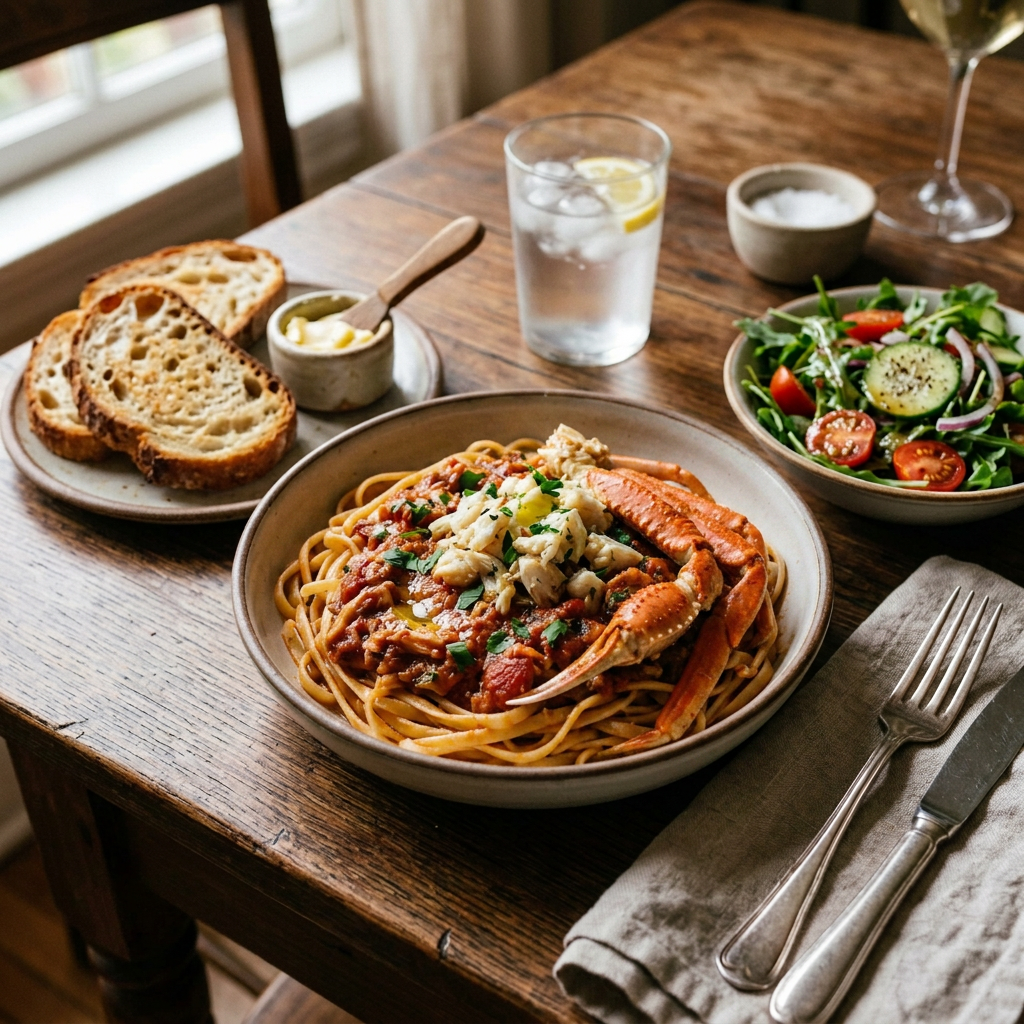
Crab Gravy and Pasta

A bowl of pasta topped with tomato and seafood sauce next to a salad with cucumber and cherry tomatoes and a plate of sliced bread
A hearty plate of pasta with crab gravy

Summer memories come alive with this delicious crab gravy and pasta! Instead of live crabs, my mom simmered tender crab legs right in the gravy, filling the house with an irresistible aroma. Now that summer has arrived and crab legs are plentiful, it’s the perfect time to share this comforting family recipe. Dig in and enjoy!

Ingredients

  • ¼ cup olive oil
  • 1 cup of yellow onion, finely chopped
  • 2 ounces anchovies, + their oil
  • 6 garlic cloves, thinly sliced
  • ¼ teaspoon red pepper flakes
  • 2 cans of whole peeled tomatoes (two 28-ounce cans)
  • 1 6-ounce can of tomato paste
  • Salt and black pepper to taste
  • 1 small bunch fresh basil, roll leaves together and slice into ribbons
  • 1 pound of spaghetti or linguine
  • 3 pounds Dungeness crab or king crab legs, scrub clean under cold running water
  • Extra basil and olive oil for serving (optional)

Process

  1. Heat olive oil in a large, heavy-bottomed pot over medium-high heat.
  2. In a large, heavy-bottomed saucepan or Dutch oven, heat the olive oil, onions, garlic, anchovies, and crushed red pepper together over medium-low heat and cook until the onions and garlic are soft and starting to brown. At this point, the anchovies will have fully dissolved into the oil.
  3. Add the tomatoes and crush them by hand as you place them in the pot. Alternatively, break them apart with a wooden spoon. Add a generous pinch of salt, then bring the mixture to a simmer.
  4. Nestle the crab legs into the gravy. Cover the pot and reduce the heat to low.
  5. Simmer for 1½ to 2 hours, stirring occasionally. Keep the crabs covered by the gravy during cooking; the gravy will develop a richer flavor and a pleasant, briny sweetness.
  6. During the final 10 minutes, add the basil leaves. Taste the gravy and adjust the salt if necessary. For a thicker gravy, stir in tomato paste until it dissolves completely.
  7. Meanwhile, boil the pasta in salted water according to package directions. Drain and set aside. Do NOT rinse.
  8. Serve the pasta with crab gravy, arranging the crabs on a platter beside it or on top. Drizzle with a little extra olive oil. Add a few more basil leaves, if desired, before serving.

08/04/2026

Oven-Baked Crab Clusters

Remove whole crab, show only crab clusters
Dungeness crab clusters with a garlic butter sauce

Turn Dungeness or Snow crab clusters into a seaside celebration with almost no fuss! A gentle bake keeps the meat tender and sweet, while melted butter, bright lemon, garlic, and fresh herbs create a delicious flavor wave in every bite. This easy dish brings party energy to special occasions but fits just as happily into a casual weeknight meal. Set it in the center of the table, hand out the crackers, and let everyone dip, share, and dig into a feast worth celebrating!

Ingredients

  • 3 pounds of Crab Clusters
  • 1 stick of Butter
  • ¼ cup olive oil
  • ¼ cup Fresh Parsley, chopped fine
  • Fresh Thyme, chopped fine
  • 4 cloves of garlic, pressed
  • 1 teaspoon of Old Bay Seasoning
  • 1 Lemon, juiced
  • ¼ teaspoon of salt
  • Dash of black pepper

Process

  • Preheat oven to 400°F.
  • Run the crab legs under cold water to thaw and scrub the shells clean. Dry them and place them into a 9 x 13” baking dish.
  • Using a sharp knife, carefully pierce each crab leg several times. This helps the melted butter and seasonings flow directly into the crab meat.
  • Melt the butter and olive oil in a microwave-safe bowl.
  • Add the chopped parsley, thyme, garlic, Old Bay seasoning, lemon juice, salt & pepper. Mix well.
  • Pour the butter mixture over the crab legs.
  • Cover the baking dish with aluminum foil. Bake it in the preheated oven for 20 minutes.
  • Let the crabs cool slightly, carefully open the shells to remove the meat, and use the remaining seasoned butter in the pan for dunking.

08/03/2026