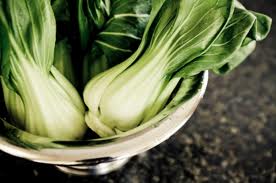
 I received three baby Bok Choy, also known as Chinese cabbage in my Bountiful Basket (a local food co-op) today. I was stumped as to how I was going to prepare them since I have only eaten this cabbage in stir fry or marinated. I decided to experiment tonight with an oven cooked bok choy.
A little about boc choy that you may not know; this vegetable contains glucosinolates. These compounds have been reported to prevent cancer in small doses, but, like many substances, can be toxic to humans in large doses, particularly to people who are already seriously ill. Cultivated in China since ancient times, bok choy is found in soups and stir-fries, appetizers and main dishes. Bok choy’s popularity comes from its light, sweet flavor, crisp texture and nutritional value. Not only is bok choy high in Vitamin A, Vitamin C and calcium, but it is low in calories.
Preheat oven to 350 degrees
Ingredients
- 1 baby Bok Choy
- Olive Oil
- 4 cloves of fresh garlic, grated or chopped very fine
- Kosher salt
- Pepper
- Parmesan cheese
Directions

Bok Choy
- Remove outer leaves if they look torn or bruised, or just cut short with scissors.
- If leaves are overly long you can trim them with scissors, otherwise leave long, they will crisp up when cooked.
- Wash with cool water and drain and dry on paper towels.
- Slice the Bok Choy lengthwise into 4 quarters leaving the stem on each piece to hold leaves together.
- Drizzle with olive oil, rub the olive oil into the leaves
- Grate the garlic cloves and spread all over the Bok Choy and into the leaves
- Sprinkle with kosher salt, pepper and Parmesan cheese
- Place on a flat baking sheet covered with aluminum foil – do not use a pan with a lip, you want them to roast not steam.
- Bake in 350 F. oven for 20 minutes, turn over and let bake for another 5 minutes
- Be careful not to overcook, the Bok Choy should be crisp tender, at this point you can cut into chunks and serve or drizzle with a good quality balsamic vinegar and serve.


 Kitchen Moxy