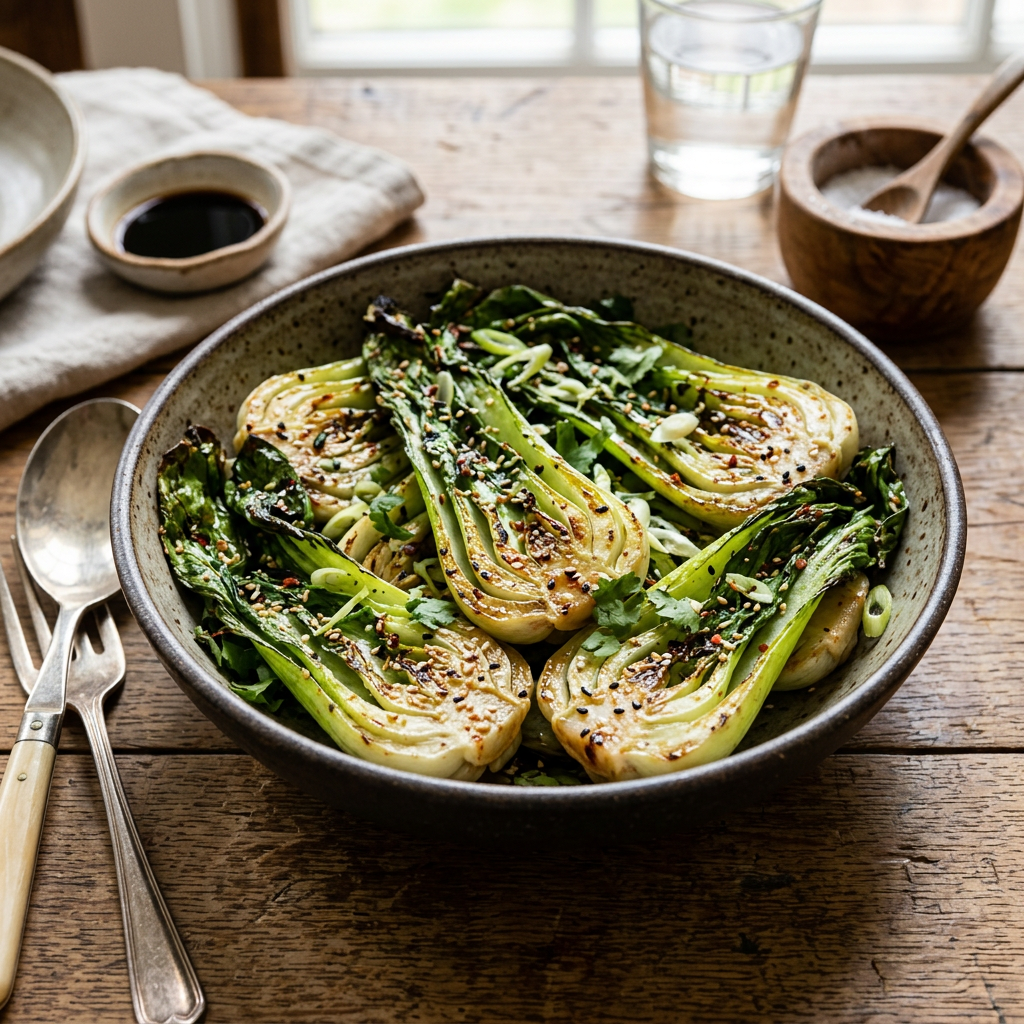
Turn humble bok choy into a crave-worthy side dish with a quick trip to the oven! Roasting creates delightfully crisp, caramelized edges while keeping the leaves tender. Garlic, sesame oil, and a sprinkle of seasoning add a savory flavor boost. Serve it alongside rice, noodles, grilled meats, tofu, or seafood for an effortless, colorful upgrade to almost any meal.
Ingredients
1 1/2 pounds of baby bok choy, washed
2 cloves garlic, pressed or grated
2 tablespoons sesame oil
1 tablespoon seasoned rice vinegar
3 tablespoons soy sauce
1/2 teaspoon salt
1 teaspoon grated fresh ginger
1/4 teaspoon Korean Red Pepper Powder (or red pepper flakes)
¼ teaspoon black pepper
1/2 teaspoon sesame seeds or scallions for garnish
Process
Preheat oven to 400°F.
Position the oven rack in the middle of the oven. Line a baking sheet with aluminum foil or parchment paper; set aside.
Trim about 1/2 inch from the bottom of each baby bok choy. Wash and dry the bok choy. Cut each one lengthwise into four pieces, leaving the stem intact so the pieces stay together.
In a small bowl, whisk together minced garlic, ginger, sesame oil, soy sauce, rice vinegar, salt, pepper, and red pepper flakes,
Arrange the bok choy evenly on the baking sheet. Brush the sauce over the bok choy, covering every nook and cranny. Sprinkle with salt and black pepper to taste.
Roast for 10 minutes. Turn the bok choy over and roast for another 6–8 minutes, until the leaves are crisp and lightly browned.
Do not overcook the bok choy. It should remain crisp-tender. Cut it into pieces and serve, or drizzle it with high-quality balsamic vinegar before serving.
Sprinkle with sesame seeds and/or sliced scallions. Serve immediately.
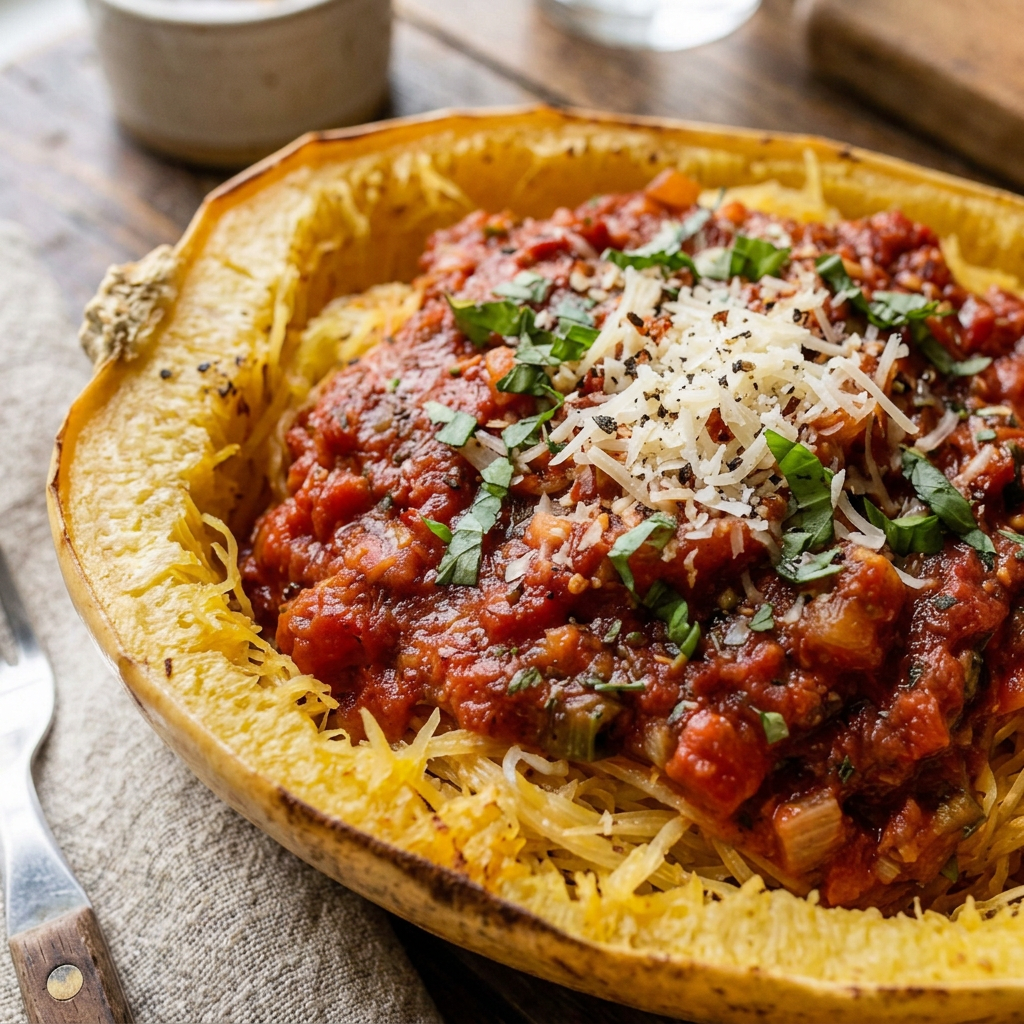
Spaghetti squash strands topped with hearty tomato sauce, herbs, and Parmesan create a comforting homemade meal.
Spaghetti squash is the vegetable that shows up to dinner wearing golden strands and a surprisingly pasta-like personality. Once cooked, its tender flesh pulls apart into delicate ribbons, creating a lighter alternative to traditional noodles. The flavor is mild and gently sweet, so it happily teams up with roasted garlic, olive oil, tomato sauce, fresh herbs, sautéed vegetables, or a generous sprinkle of cheese.
Ingredients
1 large spaghetti squash
2 tablespoons of olive oil
1 large Roma tomato, finely chopped
2 tablespoons of fresh basil
¼ cup shredded mozzarella or parmesan cheese
1 teaspoon each coarse salt and pepper
1 teaspoon garlic powder
Process
Preheat oven to 400°F.
Wash the squash thoroughly under running water to remove dirt. Pat it dry.
Pierce the squash with a knife or fork. Microwave it on high for 4 minutes. Let it rest for 2 minutes.
Place the squash on a towel to keep it steady. If cutting it lengthwise, cut off the stem end first. Then use a very sharp knife to cut the squash in half lengthwise.
Use a fork to remove the seeds and center strings.
Drizzle the inside of the two halves with olive oil, using your hands or a brush to ensure all surfaces are coated.
Sprinkle the coarse salt, pepper, and garlic powder all over the inside surface of the squash.
Place the squash cut-side down in an oven-safe dish or pan.
Bake in a preheated oven for 40 – 50 minutes or until the squash is soft and the strands pull up easily with a fork.
Remove from the oven and fluff the squash with a fork, pulling the strands away from the sides – leave squash in shell.
Turn oven onto broil
Add the tomatoes and fresh basil to the fluffed squash and sprinkle each half with the cheese.
Place under broiler for 3 to 4 minutes or until the cheese is melted and lightly browned.
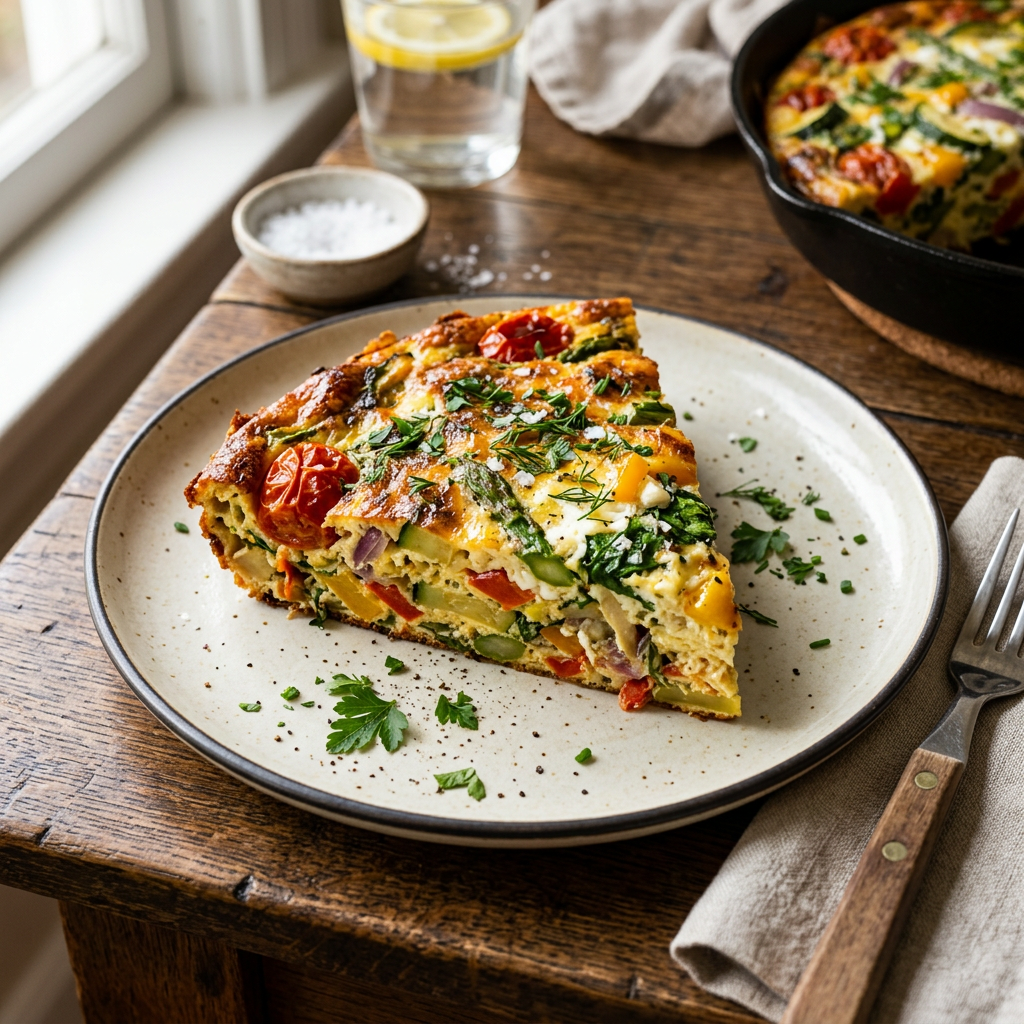
Eggs are a delightful culinary canvas any time of day—breakfast, lunch or dinner—and every part is edible, even the shell when ground for calcium. While shell color doesn’t change flavor, I’m lucky to know farmers whose hens lay blue, green, pink, brown and white eggs—Easter surprises all year. Those backyard eggs are incredibly fresh and, to me, taste like sunshine on a plate. Versatile and nutritious, eggs adapt to countless meals. Try a playful baked frittata: toss in your favorite vegetables, bits of cheese and a pinch of herbs to make a signature version. Serve a colorful tossed salad alongside a warm slice of frittata for a satisfying, balanced dinner.
Ingredients
7 Large Eggs
¼ cup of Whole Milk
1/3 cup of cheese (see NOTE below for choices)
Dash of salt
Dash of pepper
¼ cup of parsley, finely chopped
1 teaspoon of fresh thyme
Up to 1-½ cup of vegetables, (see NOTE below)
Process
Preheat oven to 350F.
Spray a deep pie plate, or a 11”x5” 7” oven proof dish
Beat all ingredients together
Mix egg mixture with your choice of vegetables and cheese
Bake in a preheated oven for 30 minutes or until a knife inserted in the middle comes out clean.
NOTE:Add-in Ingredients in ½ cup increments, up to 1-1/2 cups
Recommended Vegetables for Frittatas
Asparagus: Tender asparagus tips provide delicate, almost sweet notes while the slightly firmer stalks contribute a gentle snap. Roasting or sautéing the asparagus briefly before adding it to the pan concentrates its natural sugars and softens any fibrousness, producing a tender result without losing its color.
Spinach: A classic choice, spinach wilts down significantly and adds a rich green element. It is well paired with various cheeses and herbs.
Mushrooms: They add a savory depth of flavor and a nice texture. Sauté them before adding them to the egg mixture to enhance their taste.
Bell Peppers: Available in various colors, bell peppers add sweetness and crunch. They should be sautéed until tender before mixing with the eggs.
Zucchini: This vegetable adds moisture and a mild flavor. Sauté it to reduce excess water before adding it to the frittata.
Onions: They provide a strong flavor base. Caramelizing onions before adding them can enhance their sweetness and depth.
Broccoli: This hearty vegetable holds its shape well and adds a nice crunch. It should be steamed or sautéed until tender before use.
Tomatoes: Fresh or sun-dried tomatoes can add a burst of flavor. If using fresh tomatoes, pat them dry to avoid excess moisture in the frittata.
Popular Cheese Choices
Cheddar: A good choice is cheddar because it adds creamy, tangy flavor and melts well, making the frittata richer. Choose mild, medium, or sharp to suit your taste. Use block cheese instead of pre-shredded for better melting and texture. Mozzarella: Mozzarella has a mild taste and melts well, giving a creamy, stretchy texture. Fresh mozzarella contains more moisture and makes a frittata softer. Low-moisture mozzarella is drier and gives a firmer result. Feta: This crumbly, tangy cheese adds a Mediterranean flavor. It pairs well with spinach, tomatoes, and olives. Feta does not melt fully but adds a salty, textured contrast. Parmesan: A firm, nutty cheese that adds savory flavor. It does not melt smoothly like soft cheeses, but you can grate it into the eggs or sprinkle it on top for a tasty finish. Gruyère and Pecorino Romano: Gruyère has a mild, nutty, slightly sweet taste and melts smoothly, so it works well in vegetable or meat frittatas. Pecorino Romano is saltier and sharper, so use only a small amount in strong, meat-based frittatas.
Tips for Using Cheese in Frittatas
Grate or crumble your own cheese to ensure smooth melting and avoid additives found in pre-shredded cheese.
Combine cheeses for complex flavors, such as mozzarella with Parmesan or cheddar with Gruyère.
Moderate the amount to prevent a greasy or overly heavy frittata.
Pair with ingredients:
Vegetable frittata: mozzarella, Gruyère, Parmesan, or goat cheese
Meat frittata: cheddar, Pecorino Romano, or Gruyère
Mediterranean frittata: use feta, goat cheese, or mozzarella. Choose cheese based on the flavor and texture you want. Try different combinations to find a balanced taste.
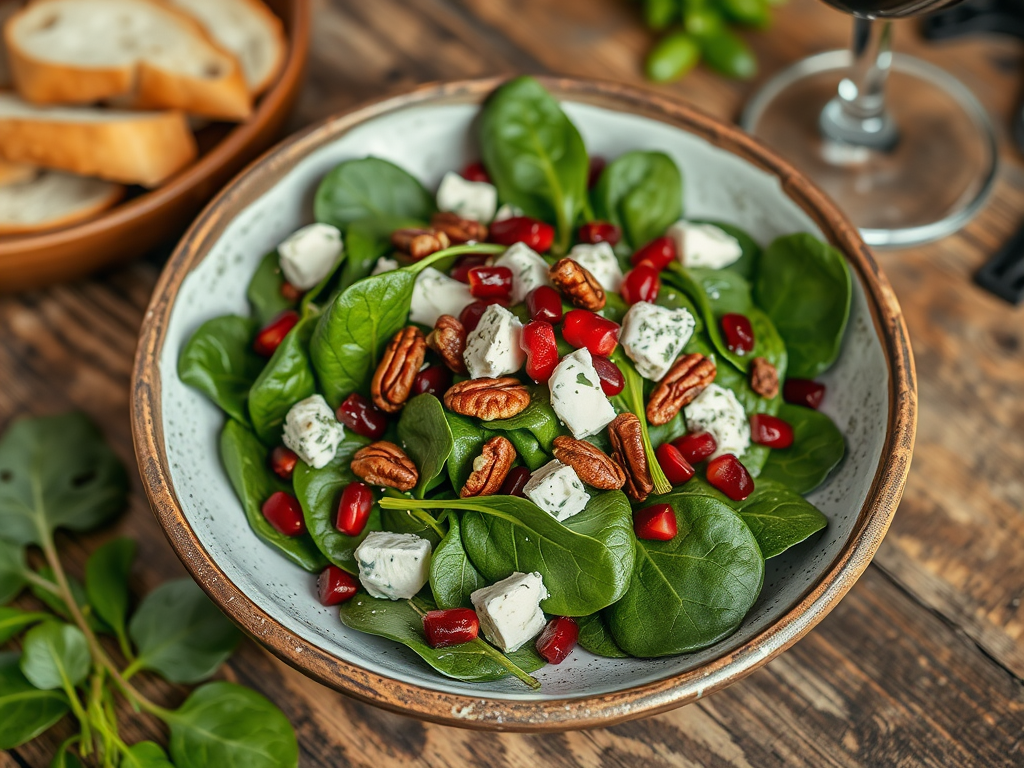
Cooking with fresh ingredients is a delightful adventure that sparks joy and creativity. Making a spinach salad with candied pecans turns mealtime into a fun, vibrant experience, filling my kitchen with warmth and happiness. It’s a simple way to add excitement and flavor to everyday meals.
Ingredients
1 tablespoon butter
½ cup pecan halves
2 tablespoons brown sugar
2 tablespoons of balsamic or white wine vinegar
2 tablespoons of olive oil
1 6-ounce package of baby spinach, long stems removed
1 Pomegranate, seeded
¼ cup feta or Gorgonzola cheese
Directions
Melt butter in a small frying pan over low heat.
Add pecans and 1 tablespoon of the brown sugar.
Cook for 2 to 3 minutes, stirring constantly until nuts are caramelized.
Spread out on wax or parchment paper to cool.
In a jar with a lid, combine the remaining brown sugar, olive oil and vinegar, shake until sugar is melted.
Place spinach in a large salad bowl and coat with the dressing, mix.
Stir in pecans and pomegranate seeds, sprinkle with feta cheese or Gorgonzola cheese
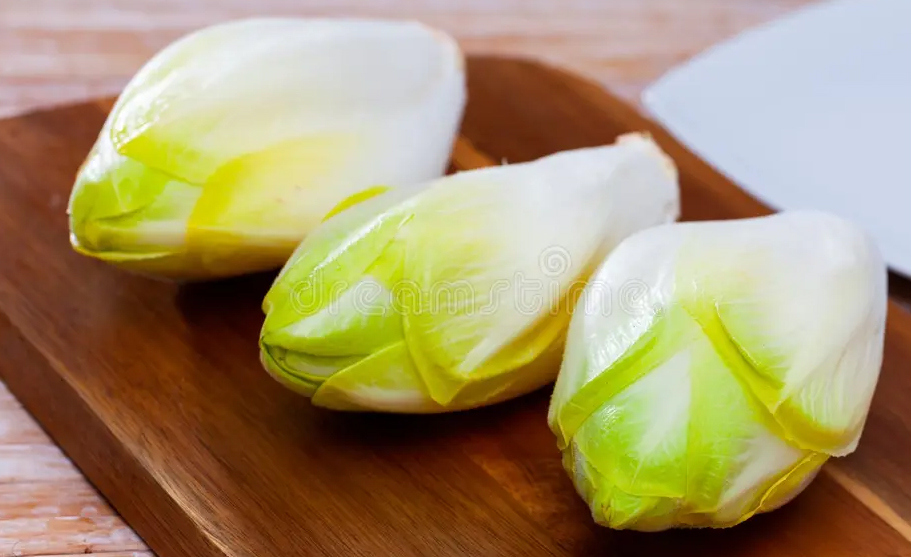
How to cook endive. Endive belongs to the chicory genus, which includes several similar bitter leafed vegetables. I am talking about the little bullet shaped endives, not the curly leaf or chicory. Endives are rich in many vitamins and minerals, especially in foliate and vitamins A and K, and are high in fiber. Endive has a bitter-sweet taste, but I thought it was very savory, almost nutty. I served it up with my baby potatoes and flounder; it made a very filling side dish. Let your kids eat these little “boats” with their fingers. Make it fun.
Here are a few suggestions on how to enjoy your endive:
Baked endive:
Preheat oven to 375° F.
Slice endive lengthwise, remove core. Keep the root end intact as it will hold the leaves together after slicing.
Brush both halves with olive oil.
Slice a fresh garlic clove into very thin slices and place the slices in between the endive leaves.
Sprinkle with kosher salt and pepper, and a little garlic powder.
Bake at 375°F. for 20 minutes.
Remove them from the oven and sprinkle balsamic vinegar over them.
Pan braised endive:
Slice your endives in half.
Sprinkle cut side with kosher salt and pepper, and any other seasoning you might like.
Melt 1 tablespoon of butter in a heavy pan along with 1 tablespoon coconut oil.
Place the endive halves cut side down in the pan, cook on medium-high heat until they are brown.
Add ½ cup chicken broth and simmer until almost all liquid is gone. Remove from pan sprinkle with Kosher salt, and drizzle with balsamic vinegar
Maple glazed endive:
Preheat oven to 350°F.
Halve 6 small endives, remove as much of the core as possible.
Arrange endive into one layer on a baking sheet with raised edges.
In a small saucepan, melt 2 tablespoons of butter then stir in 2 tablespoons of real maple syrup, 2 teaspoons of thyme and ¼ teaspoon salt. When hot, pour over the endive and bake until tender and the edges begin to brown, 20 to 25 minutes.
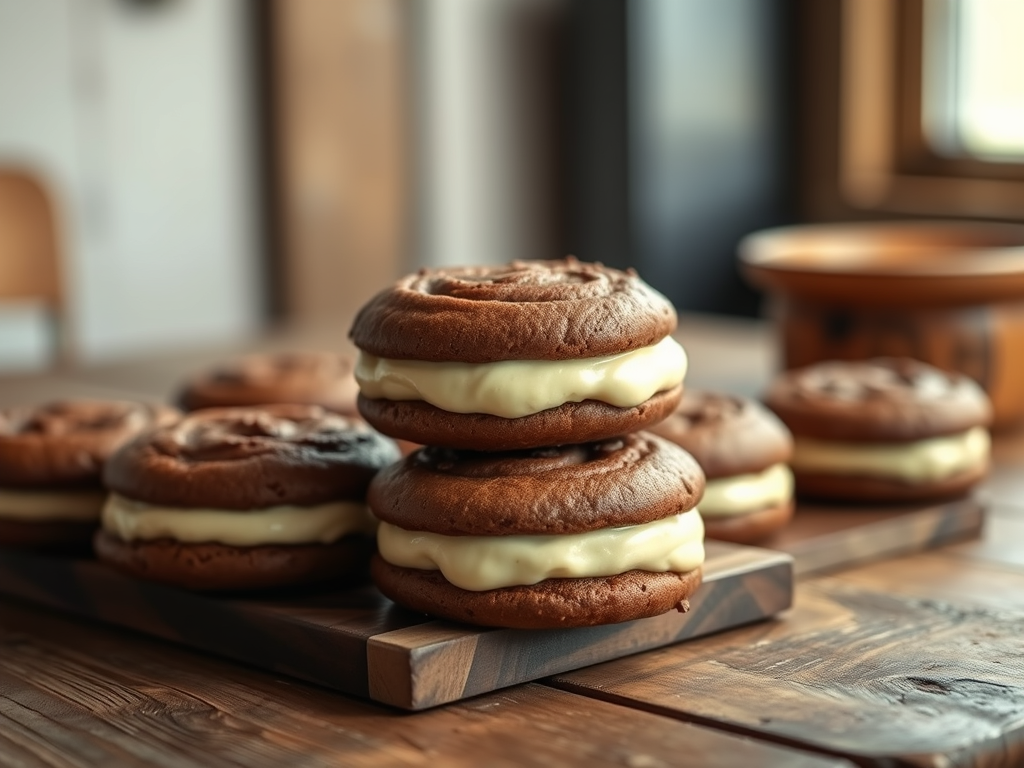
The history of Whoopie Pies is an interesting part of American food culture, mainly in the Northeastern U.S. They likely started in the early 1900s, possibly in Pennsylvania or Maine. The name “Whoopie” may come from children’s exclamations of joy or surprise when discovering the sweet filling inside. These treats have become a beloved regional specialty, reflecting local culinary traditions and history.
Cookie Ingredients
1 cup sugar
½ cup shortening
1 egg
1 egg yolk
2 cups of all-purpose flour
2/3 cup unsweetened cocoa powder
¼ teaspoon salt
1 teaspoon of baking soda
½ cup hot water
2/3 cup buttermilk
Cookie Process
Preheat oven to 350°F. Line 2 cookie sheets with parchment paper.
Beat together sugar and ½ cup shortening at high speed with a stand mixer until fluffy.
Add the egg and egg yolk and beat until incorporated.
In a separate bowl, stir together the flour, cocoa powder, and salt; set aside.
Dissolve baking soda in the ½ cup of hot water; cool slightly.
Add the flour mixture, the soda mixture, and 2/3 cups of buttermilk alternately to the sugar, shortening mixture.
Beat at a medium speed until well mixed.
Drop batter by rounded tablespoonfuls 2 inches apart onto a parchment paper lined cookie sheet. Bake for 8 – 10 minutes.
Cool cookies on a cookie rack. Yields 48 cookies.
Filling Ingredients
2 cups sifted powdered sugar
½ teaspoon of meringue powder
1 teaspoon vanilla
½ cup shortening (such as white Crisco)
¼ cup butter
Filling Process
In a stand mixer, add shortening and butter, vanilla, 1 teaspoon of water and beat at high speed until light and fluffy.
Turn mixer to low and gradually add powdered sugar and meringue powder.
Beat on high until mixture is light and fluffy. If mixture is too thick to spread, add 1 teaspoon of water at a time, until it is spreading consistency.
Spread some filling on the flat side of half the cookies, top with the remaining cookies, flat side down.