Category Archives: Fish

Salmon Burgers

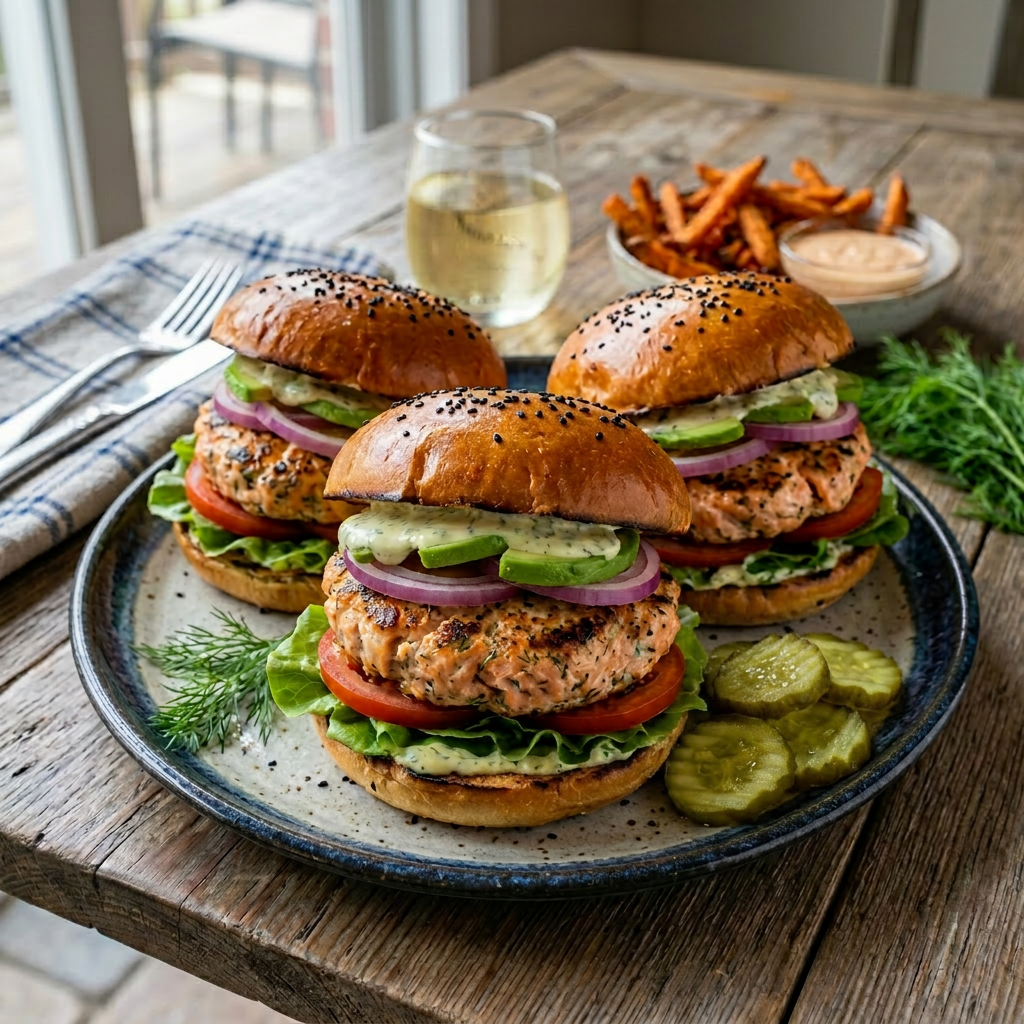
Three salmon burgers with lettuce, tomato, red onion, cheese, and sauce on sesame buns with sweet potato fries and dipping sauce
Salmon burgers with fresh toppings, served with sweet potato fries

Salmon burgers turn dinnertime into a tasty adventure, blending flaky salmon with bright lemon zest, fresh herbs, garlic, and a hint of Dijon for a lively flavor kick. These patties come together in no time and sizzle on the stovetop, grill, or in the oven, delivering juicy, savory bites that beat ho-hum meals. Skip heavy toppings and celebrate simplicity: crisp lettuce, a juicy tomato slice, and a scoop of yogurt-dill sauce create the perfect balance. Packed with omega-3s and lean protein, they’re a clever, feel-good choice for busy evenings or casual gatherings. Make them ahead and reheat briefly under the broiler or in a skillet to revive that fresh-off-the-grill charm whenever you need a quick, delightful meal.

Makes 4 burgers

Ingredients

Salmon Burgers

  • 1 5oz pouch of Chicken of the Sea Skinless & Boneless Pink Salmon or 1 14.75 ounce can of wild salmon *See notes below regarding canned salmon
  • 1/4 cup minced red onion
  • 1/4 cup finely chopped bell pepper
  • 1 tablespoon of Dijon mustard
  • 1 tablespoon of lemon zest
  • 1 tablespoon of fresh lemon juice
  • 1/4 tsp cayenne pepper
  • 2 garlic cloves, pressed or minced
  • 2 tablespoons of fresh dill, chopped
  • 1 medium egg (beaten)
  • 1 cup panko breadcrumbs
  • Salt and pepper to taste
  • 1 tablespoon of Olive oil or Avocado Oil if pan frying

Process

  1. Preheat oven to 400°F (200°C).
  2. Combine onion, lemon juice, lemon zest, and seasonings in a bowl.
  3. Combine salmon, beaten egg, and 1/4 cup breadcrumbs. If the mixture is too loose to shape, add 1 tablespoon more of breadcrumbs. The mixture should be soft and hold together, but not stiff or sticky.
  4. Gather about 1/2 cup of the salmon mixture and shape it into a loose ball. Roll the ball in the remaining 3/4 cup of breadcrumbs to coat it. Place the coated patty on a plate and repeat with the remaining mixture.
  5. Line a baking sheet with parchment paper. This prevents the burgers from sticking and makes cleanup a breeze. Lightly grease the parchment paper with cooking spray or olive oil.
  6. Place the patties on the prepared baking sheet, leaving some space between each burger.
  7. Bake for 12-15 minutes, or until the burgers are cooked through and flake easily with a fork. The internal temperature should reach 145°F (63°C).
  8. Allow the burgers to rest for a few minutes before serving. This allows the juices to redistribute, resulting in a more flavorful and moister burger.

Dill Sauce

  • 1/2 cup plain non-fat Greek yogurt
  • 1 clove garlic, crushed
  • 2 tbsp chopped dill
  • 2 tbsp lemon juice
  • salt and pepper to taste

 Process

  1. Mix all ingredients in a small bowl and set aside.

Note: Drain cans of salmon thoroughly so patties bind and brown perfectly. You don’t have to worry about the fish bones: The canning process makes them soft and edible.  The dense, meaty flesh is ideal for forming into patties, so it’s a natural for burgers.  

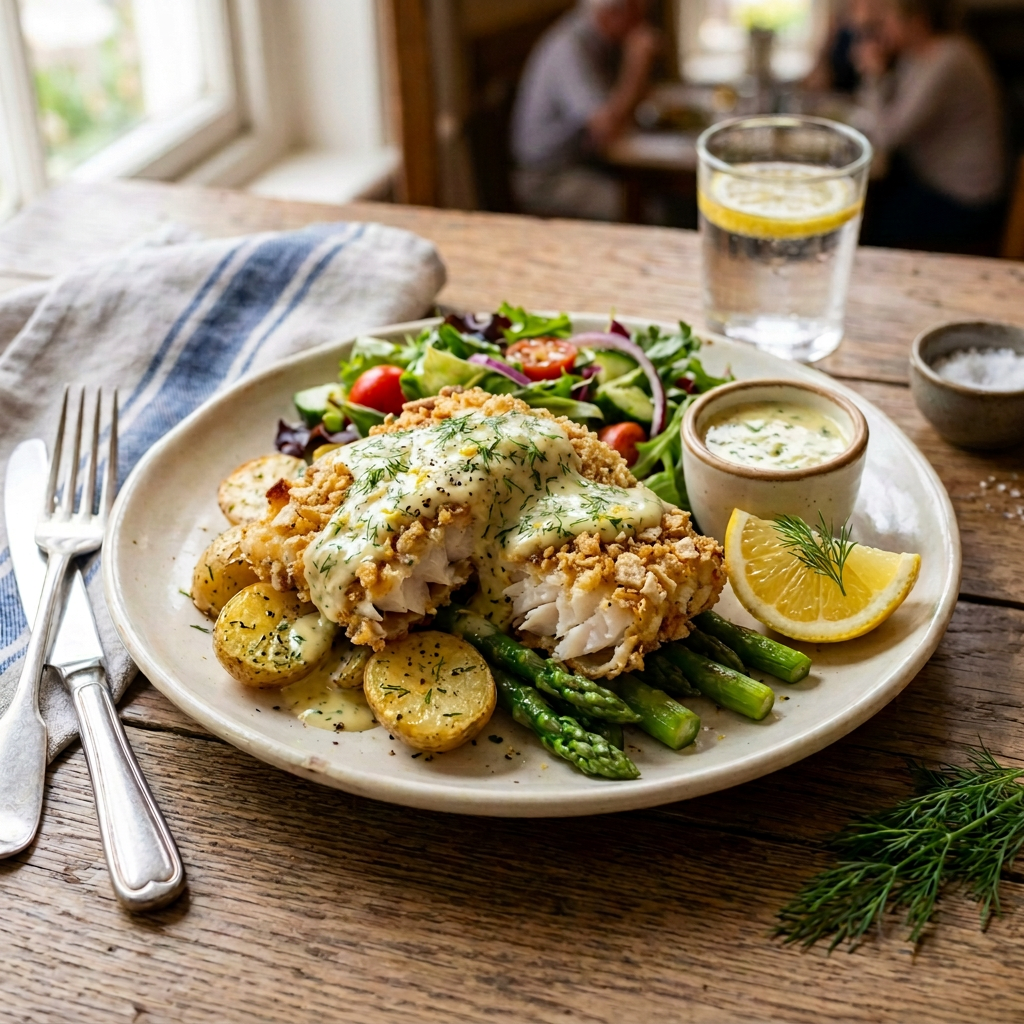
Summer Delight: Flounder Stuffed with Crab

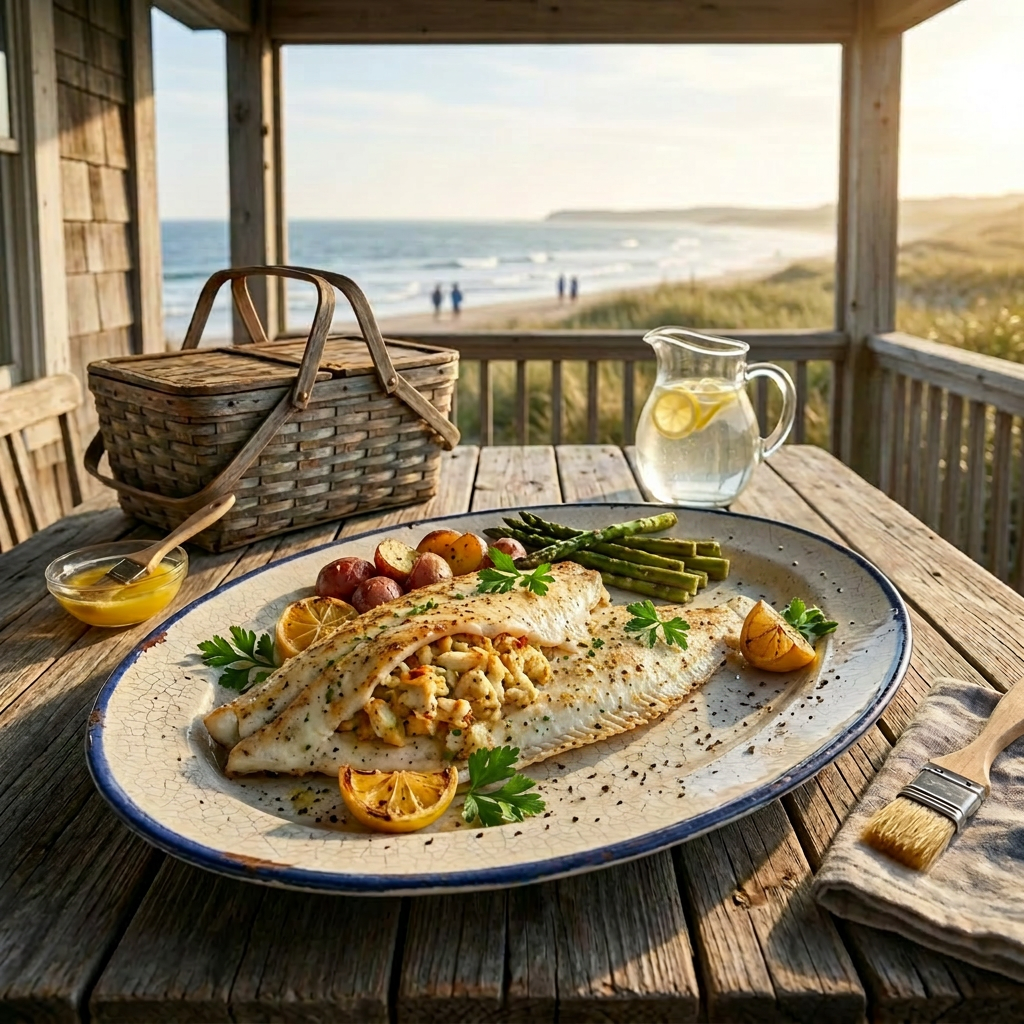
Stuffed fish on a plate with lemon, potatoes, asparagus, and a pitcher of lemon water on a wooden table by the ocean

Bring sunshine to the table with a playful, crowd-pleasing dish that’s perfect for summer get-togethers: flounder stuffed with crab. Imagine delicate flounder fillets gently wrapped around a savory, herbed crab filling that’s bright with lemon, kissed by garlic, and uplifted with fresh herbs. Each bite offers tender, flaky fish paired with sweet lump crab—light enough for warm evenings, yet hearty enough to satisfy a hungry crowd. Whether you’re feeding a small group or a boisterous crowd, crab-stuffed flounder brings coastal charm, bright flavors, and a touch of summer whimsy to every gathering.

Ingredients

  • 4 to 5 Large fillets

Preparation

Stuffing Options

  • Sprinkle flounder with salt and pepper. Using a fillet knife, carefully open the flounder by cutting along the left and right sides of the seam down the middle of the fish to make pockets. Lay the cut sides back.
  • Roll method: Place stuffing into a strip of fillet, roll it up, and secure with toothpicks or skewers.
  • Layer method: Place stuffing into a cavity or between two fillets, then cook.

CRAB MIX

Ingredients

  • 2 green onions, thinly sliced (about 1/4 cup)
  • 1 clove garlic, minced
  • 1 red pepper, minced
  • 2 tablespoons fresh parsley, chopped fine
  • 1 egg
  • 1/8 teaspoon cayenne pepper
  • 1/8 teaspoon garlic powder
  • 3 tablespoons heavy cream
  • 1 1/2 tablespoons Dijon mustard
  • 1/2 lemon, juiced
  • 2 tablespoons plain Greek yogurt, or sour cream
  • 10 saltine crackers, crumbled medium to fine
  • 1 pound lump crabmeat, picked clean of shells
  • Salt and freshly ground black pepper

Directions:

  1. Preheat the oven to 350°F.
  2. In a medium skillet, melt the butter and sauté the onions, garlic, parsley, and peppers until soft; set aside to cool.
  3. In a mixing bowl, combine the egg, cayenne pepper, garlic powder, heavy cream, mustard, lemon juice, and Greek yogurt. Add the cooled onions, garlic, peppers, and parsley; gently mix in the Saltine crackers and crabmeat. Add salt and pepper to taste.  
  4. Stuff the flounder with the Crab Mix, and press the sides down to cover the filling. Sprinkle with paprika.
  5. Coat a glass baking dish with cooking spray. Place the fish in the dish and bake for 20 minutes or until internal temperature reaches 145°F.
  6. Without removing the dish from the oven, turn the oven to broil and broil for 5 additional minutes.
  7. When the fish is done, remove it from the oven.

*Optional: Melt ½ cup of butter and drizzle over fillets when finished baking.

Shrimp Lettuce Wraps

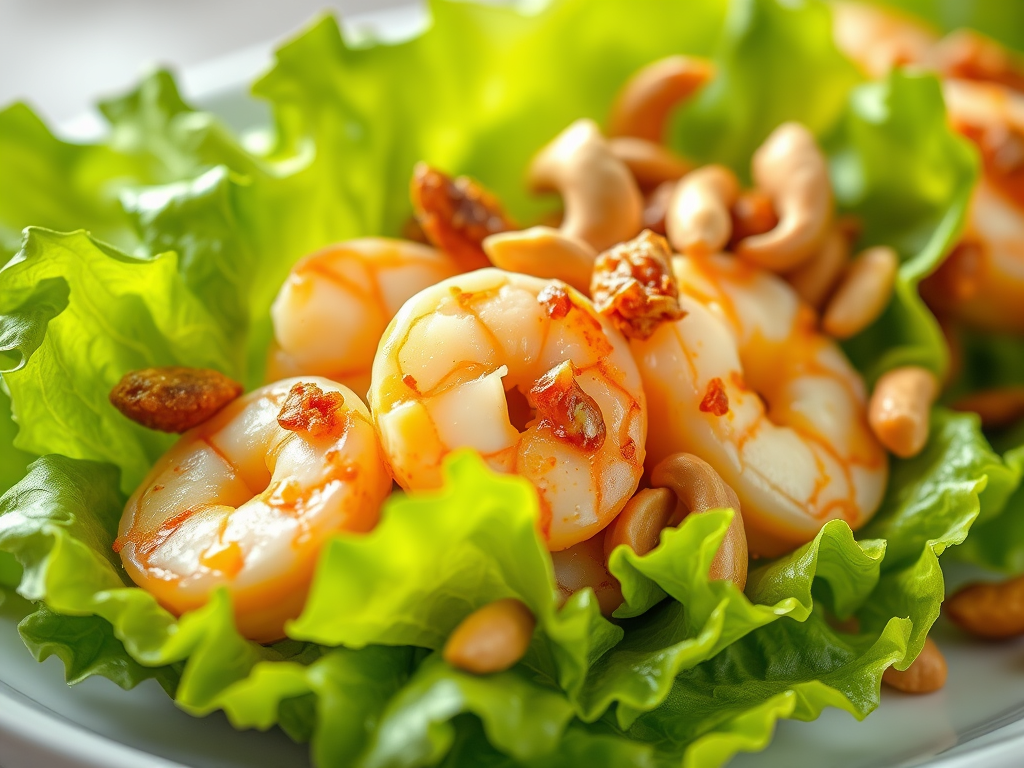
This recipe involves wrapping a tasty filling in lettuce leaves, creating a satisfying vegetable and shrimp wrap. A store-bought rotisserie chicken, shredded, can substitute for the shrimp. For variety, consider experimenting with other vegetables such as snow peas, mushrooms, or canned bamboo shoots. These additions can enhance the dish’s flavor and texture, making it more exotic and satisfying. The preparation is simple, and the result is a healthy, flavorful wrap that can be enjoyed as a snack or light meal. Feel free to customize the ingredients to suit your taste preferences and create new flavor combinations.

Ingredients:

  • 1 tablespoon of sesame oil to coat pan
  • 2 tablespoons low sodium soy sauce
  • 1 tablespoon dry sherry or apple cider vinegar
  • 1 tablespoon hoisin sauce
  • 1 teaspoon rice vinegar
  • ¼ teaspoon red pepper flakes
  • 1 tablespoon minced garlic
  • 1 tablespoon minced peeled ginger
  • 1 (14 oz) bag of coleslaw
  • 1/2 cup sliced scallions
  • 1 small, peeled zucchini, sliced very thin with a vegetable peeler
  • About 12 Bibb lettuce leaves rinsed, and dried, or Boston lettuce.
  • 1 lb. of deveined and peeled medium shrimp
  • 1/4 cup chopped cashews or peanuts

Process

  1. In a bowl, mix soy sauce, dry sherry, hoisin sauce, red pepper flakes, and rice vinegar. Set aside.
  2. In a small bowl combine minced garlic and minced ginger. Set aside.
  3. In another bowl, combine coleslaw, scallions and zucchini, set aside

Directions:

  1. Heat a large wok or frying pan on medium-high heat, add 1 tablespoon of sesame oil and swirl oil to coat pan or use a pastry brush.
  2. Add garlic and ginger, cook for about 30 seconds, stirring to prevent burning.
  3. Add soy sauce mixture, coleslaw, and vegetables. Cook for 1 minute stirring.
  4. Add shrimp and stir fry until shrimp is pink and cooked through. Coleslaw and veggies should be crisp tender at this point.
  5. Divide mixture among lettuce leaves, sprinkle with cashews and enjoy.

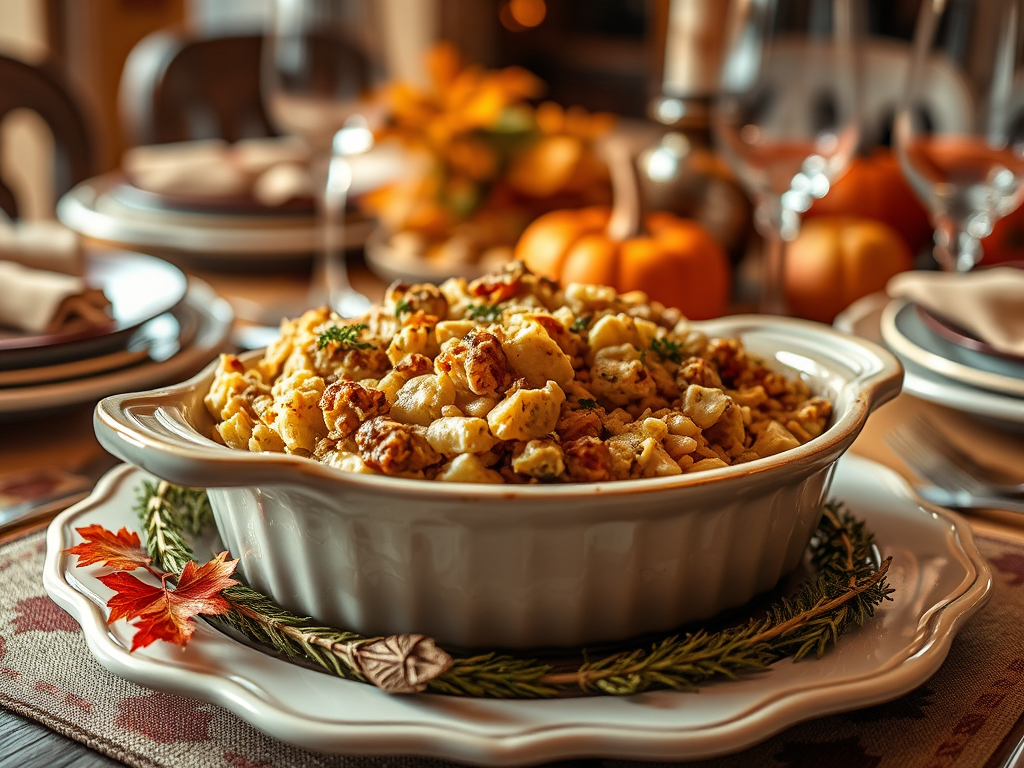
Oyster Stuffing

The history of oyster stuffing dates back to at least 1685, when it was first mentioned in the cookbook The Accomplisht Cook in London. Traditionally, the stuffing was placed under the skin of the bird, a common practice at the time. By 1796, culinary advice suggested stuffing the cavity of the bird instead. Different regions have their own preferred types of stuffing: Southerners often favor pecan, rice, or cornbread; Italians typically include sausage; and Germans enjoy dried fruit, potatoes, and apples. I personally discovered an oyster stuffing recipe many years ago and decided to try it. I am pleased to say that this stuffing is delicious, it does not have a fishy smell or taste. One of its advantages is that it can be served as a standalone dish. For the best flavor, I recommend using fresh herbs whenever possible. Enjoy your cooking experience and the unique taste of oyster stuffing.

SERVES 8—10

INGREDIENTS

  • 11 cups ½” cubed white French bread (about 14 oz.)
  • 6 slices bacon
  • 6 tbsp. butter, melted, plus more for greasing the pan
  • 6 shallots, thinly sliced
  • 4 celery ribs, thinly sliced
  • 40 medium oysters, such as Bluepoint’s shucked (about 1 lb.), with 1 cup of the liquor reserved (I have used canned oysters)
  • 1 cup chicken stock
  • ¼ cup madeira or port (a sweet wine)
  • ⅓ cup chopped flat-leaf parsley leaves
  • 2 tbsp. fresh chopped thyme leaves
  • 2 tbsp. fresh chopped sage leaves
  • ½ tsp. Tabasco (or any hot sauce)
  • ¼ tsp. fresh grated nutmeg
  • ⅛ tsp. ground cloves
  • Kosher salt and freshly ground black pepper, to taste

DIRECTIONS

  1. Preheat oven to 250˚F.
  2. Arrange bread cubes on a baking sheet in a single layer and bake, stirring occasionally, until dried but not browned, about 15 minutes. Remove bread cubes from the oven and let cool.
  3. Put bacon into a 12″ skillet; cook over medium-high heat, stirring frequently, until crisp for about 10 minutes. Remove bacon from pan. Reserve 1 tablespoon of grease.
  4.  Add 4 tablesopoons of butter to bacon grease and heat. Add shallots and celery, reduce heat to medium, and cook, stirring occasionally, until vegetables are soft, about 10 minutes.
  5.  Add oyster liquor, stock, Madeira or port, parsley, thyme, sage, Tabasco, nutmeg, cloves, and salt and pepper. Bring to a boil over high heat and cook, stirring occasionally, for 5 minutes.  Scrape the mixture into a large bowl and stir in the bread cubes and oysters. Set aside to allow the flavors to come together for 10 minutes.
  6. Raise the oven temperature to 400˚. Transfer mixture to a buttered 2-qt. oval baking dish and cover with foil. Bake for 30 minutes, remove foil, drizzle with remaining butter, and continue baking until golden brown and crusty, about 15 minutes more. Serve immediately.