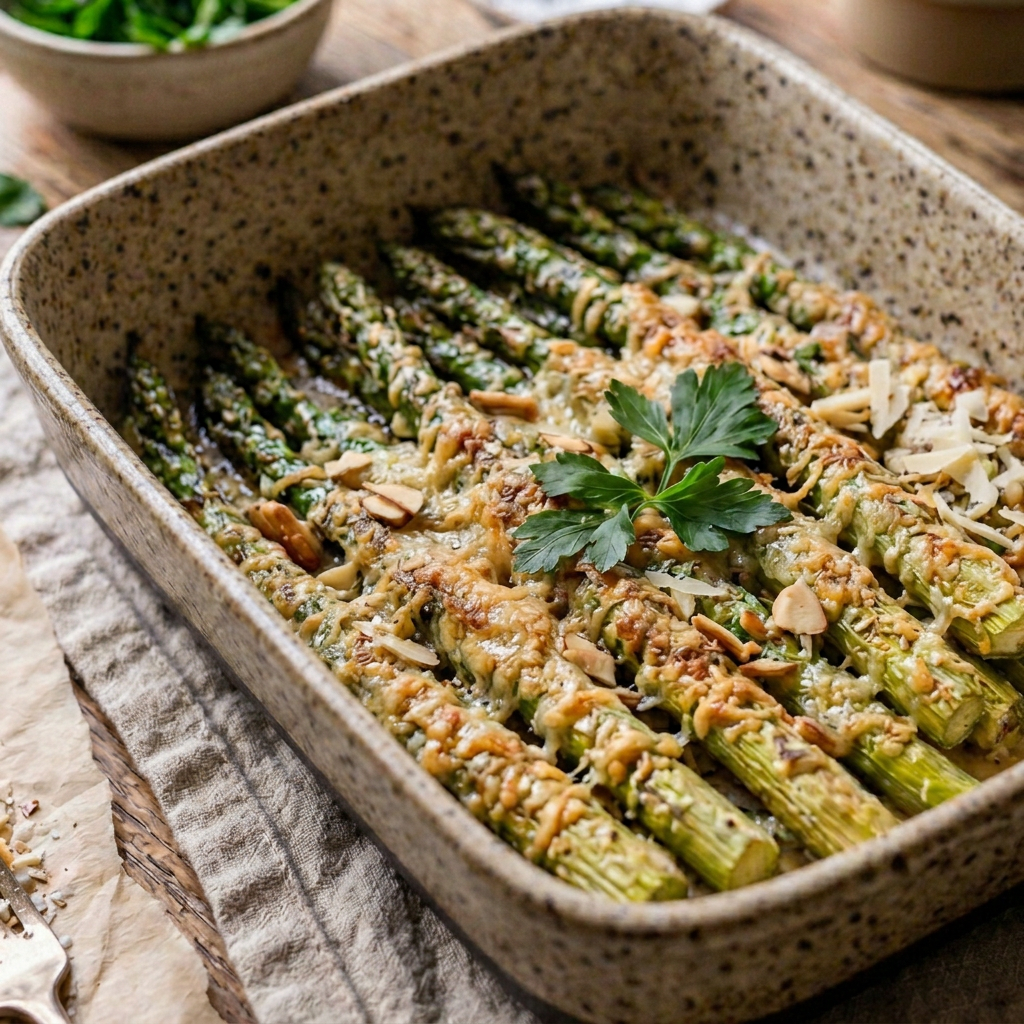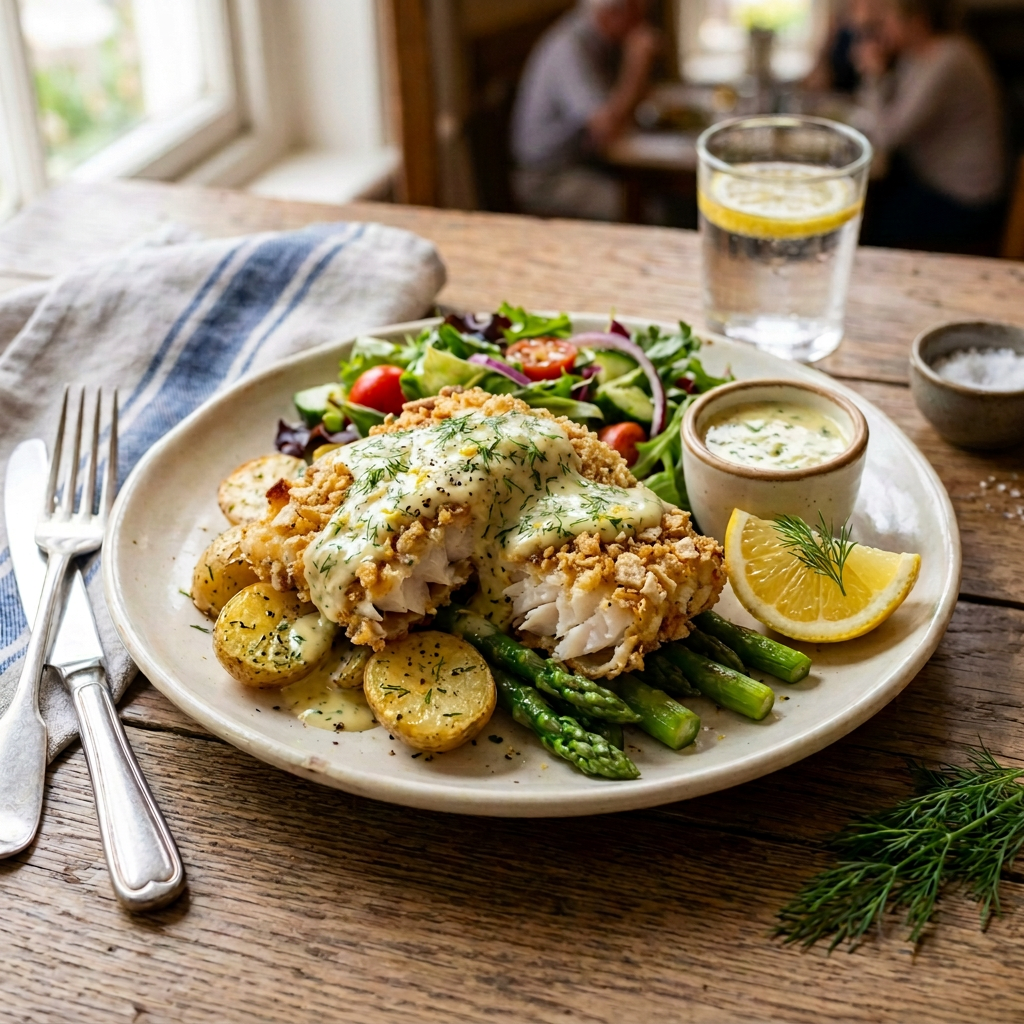
Bright, savory, and wonderfully crisp-tender, this marinated oven-baked asparagus turns a simple side into something special. Each spear enjoys a quick, flavor-packed soak in olive oil, vinegar, garlic, herbs, and a hint of sweetness before meeting a golden Parmesan coating. Baked until lightly browned, sizzling, and irresistibly fragrant, the asparagus delivers elegant flavor with effortless charm.
Ingredients
½ pound of fresh Asparagus
½ cup grated Parmesan cheese
Marinade Ingredients
1 tablespoon Olive Oil
1 tablespoon Seasoned Rice Vinegar (or white wine vinegar)
1 teaspoon sugar
2 garlic cloves, crushed
1/2 teaspoon dill weed
1/4 teaspoon thyme
1/2 teaspoon Salt
1/8 teaspoon Pepper
Process
Preheat oven to 375°F.
Wash asparagus and trim the woody ends.
Mix the marinade ingredients in a plastic bag. Add the asparagus and chill for 15 minutes.
Sprinkle Parmesan cheese on a plate and roll each asparagus sphere in cheese until coated.
Arrange the asparagus spheres in a single layer in a rimmed pan, then sprinkle the remaining marinade over them.
Bake for 15-20 minutes until light brown and tender.
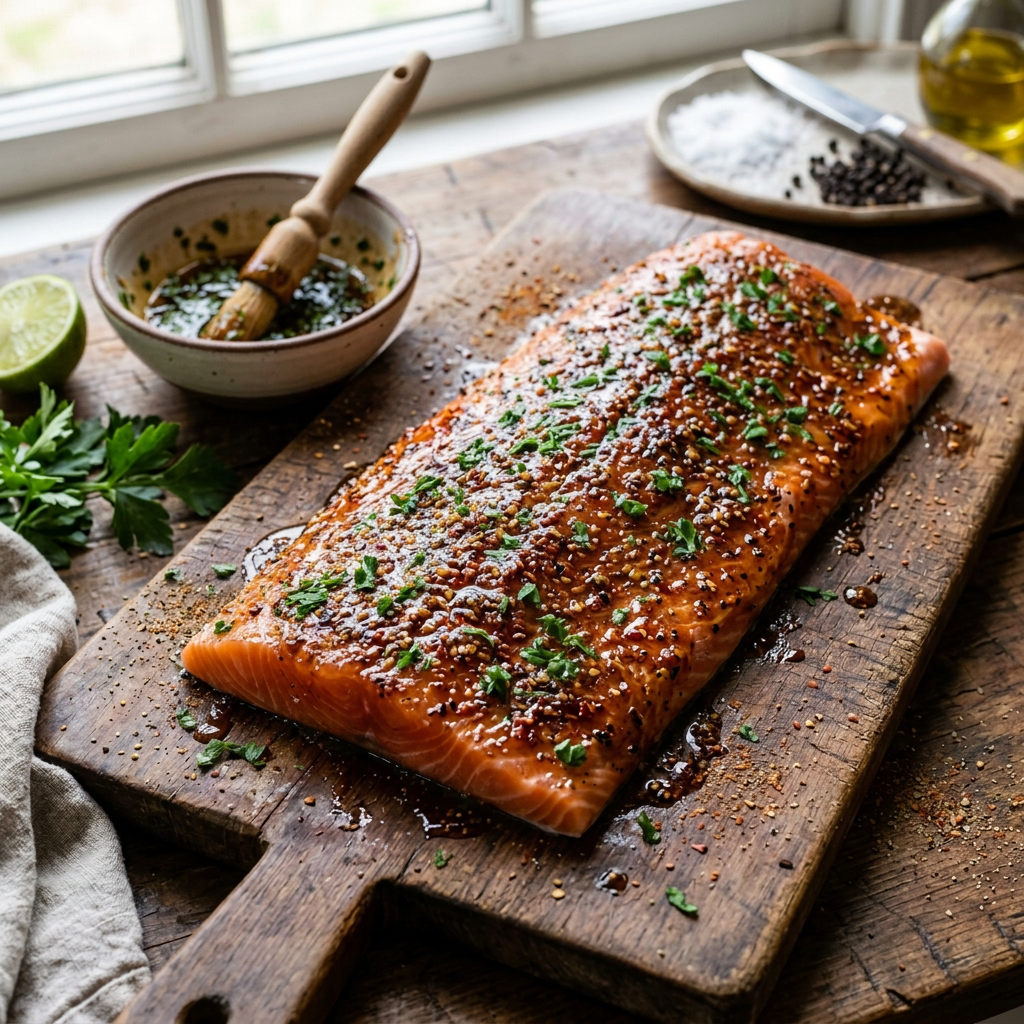
Honey-coated salmon brings together tender, buttery fish and a glossy caramelized glaze that balances sweetness with just a tiny bit of heat from the red pepper, creating a savory finish. As the honey melts into the warm fillet, it creates a golden crust that pairs beautifully with cracked pepper, fresh herbs, and a hint of garlic. Elegant enough for a dinner party yet simple enough for a weeknight meal, this dish delivers rich flavor, vibrant color, and irresistible aroma in every bite.
Ingredients
One full Salmon fillet
3 tablespoons of butter
2 tablespoons of Old Bay seasoning
2 cloves of garlic, pressed or grated
¼ cup of minced parsley
¼ cup honey
1 teaspoon salt
¼ teaspoon black pepper
¼ teaspoon of Korean Red Pepper powder
Process
Preheat oven to 400°F.
Whisk Old Bay seasoning, honey, parsley, garlic, ¼ teaspoon salt, and both peppers in a small bowl.
Put the salmon fillet on an ungreased baking sheet, skin side up. Pat dry with paper towels.
Sprinkle ½ teaspoon of salt on the skin. Turn the salmon over, and pat dry with paper towels.
Brush the honey mix over the fillet. Cut the butter into small pieces and place them on the salmon.
Bake for 18–23 minutes, or until an instant-read thermometer reads 145°F inside.
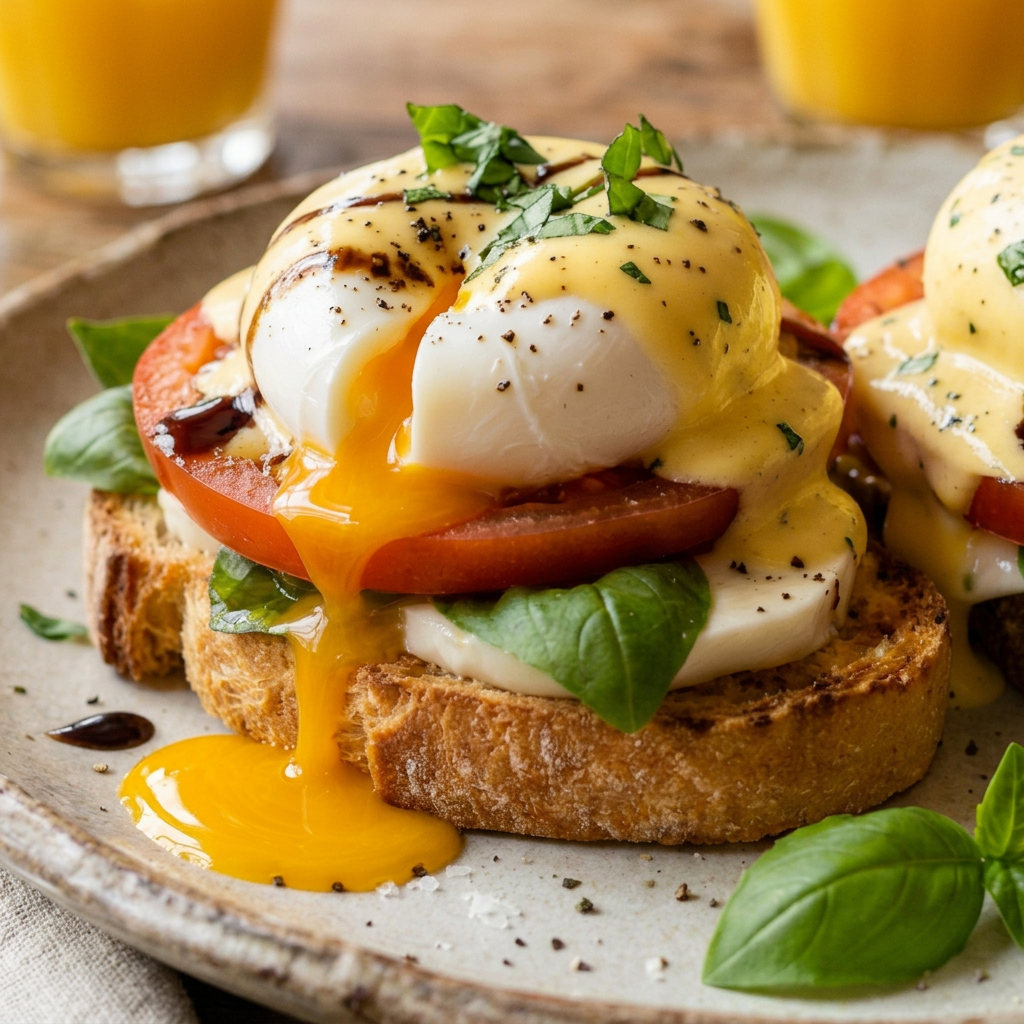
1 ounce of mozzarella cheese, sliced into 4 pieces
2 English muffins, split
4 large eggs
4 teaspoons of pesto
Salt to taste
Process
Fill a large saucepan with 3 inches of water. Bring it to a boil over high heat. Reduce the heat to medium-low, pour in the vinegar, and maintain a gentle simmer.
Preheat oven to 350°F.
Split each English muffin horizontally using a fork to preserve the nooks and crannies.
Spread a thin layer of butter over each English muffin half. Add one slice of mozzarella and one slice of tomato to each half.
Cook in the oven until the cheese softens and the English muffin has toasted.
Crack an egg into a small bowl. Holding the bowl just above the simmering water’s surface, gently slip the egg into the water. Repeat with the remaining eggs.
Simmer the eggs for about 3½ minutes, until the whites are firm and the yolks are thickened but still soft.
Use a slotted spoon to remove the eggs from the water, then place them on a paper towel to drain.
Place a poached egg on top of each English muffin. Spoon 1 teaspoon of pesto sauce onto each and sprinkle with salt.
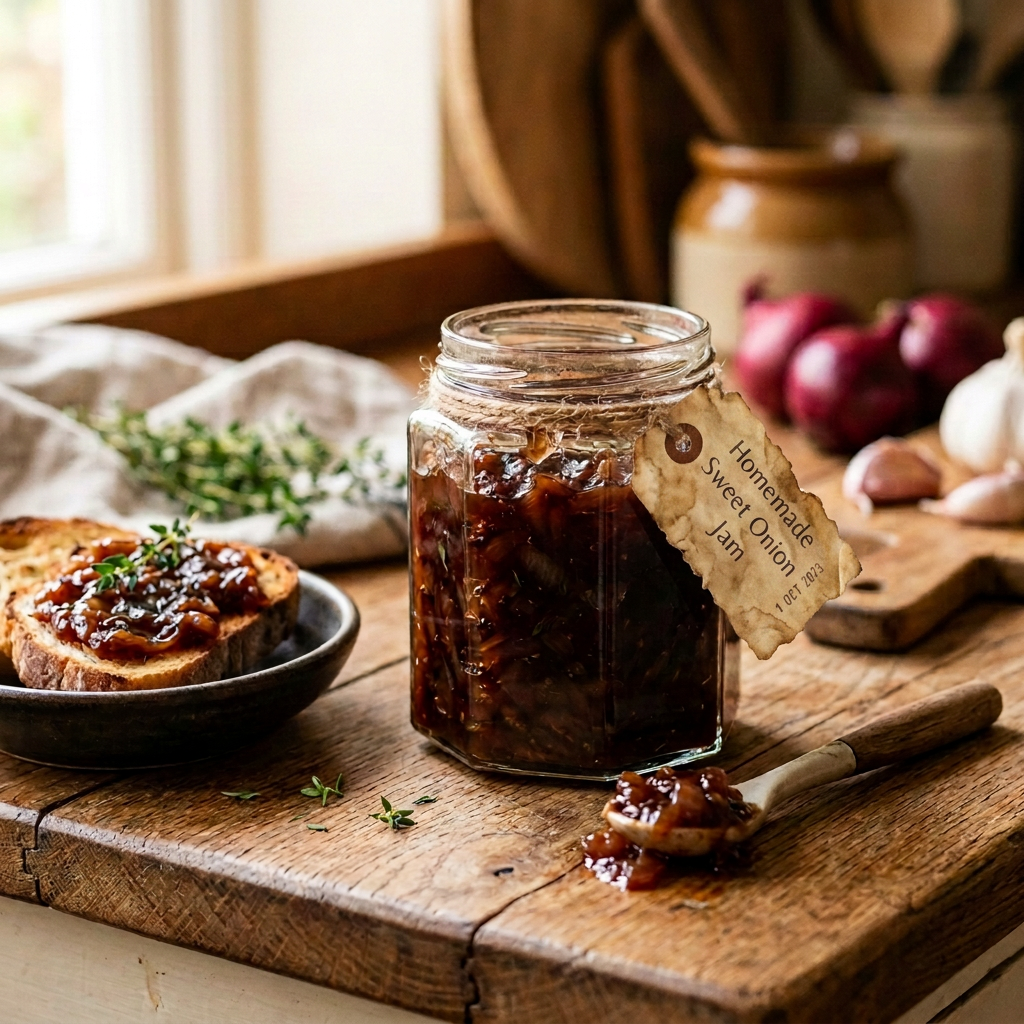
Onion Jam is a slow-cooked preserve that transforms humble onions into a rich, glossy condiment with remarkable depth. As the onions gently soften and caramelize, their natural sweetness intensifies, balanced by savory notes and a subtle touch of acidity. The result is tender, spreadable, and complex, with layers of buttery richness, mellow allium flavor, and a lingering finish on the palate. Spoon it onto a cheeseboard, tuck it into a grilled cheese sandwich, or serve it alongside roasted meats to add warmth and contrast. Sweet without being cloying and savory without becoming heavy, onion jam brings a polished, versatile character to both simple snacks and elaborate dishes.
Ingredients
2 tablespoons olive oil
3 large, sweet onions, cut into 1/4-inch dice
2 parsley sprigs
2 Fresh Thyme sprigs
1 fresh rosemary sprig
1 cup sugar
3/4 cup white balsamic vinegar
½ teaspoon of Kosher salt
Process
Heat the olive oil in a large pot over medium heat until it shimmers. Add the onions and cook over medium heat, stirring occasionally, until golden brown, about 15 minutes.
Tie the parsley, thyme, and rosemary with kitchen twine. Add the herb bundle to the diced onions. Cook over low heat, stirring a few times, until fragrant, about 3 minutes.
Sprinkle the sugar over the onions and cook, without stirring, until the sugar melts, for about 5 minutes.
Turn the heat to high and cook without stirring for about 6 minutes, until the caramel turns amber brown. Then reduce the heat to low.
Stir in the white balsamic vinegar. Simmer over low heat for about 5 minutes, stirring occasionally, until the jam thickens and the vinegar is absorbed. Remove the herb bundle. Season with salt and let the jam cool until warm.
Note: The caramelized onion jam can be refrigerated for up to five days. Serve warm or at room temperature.
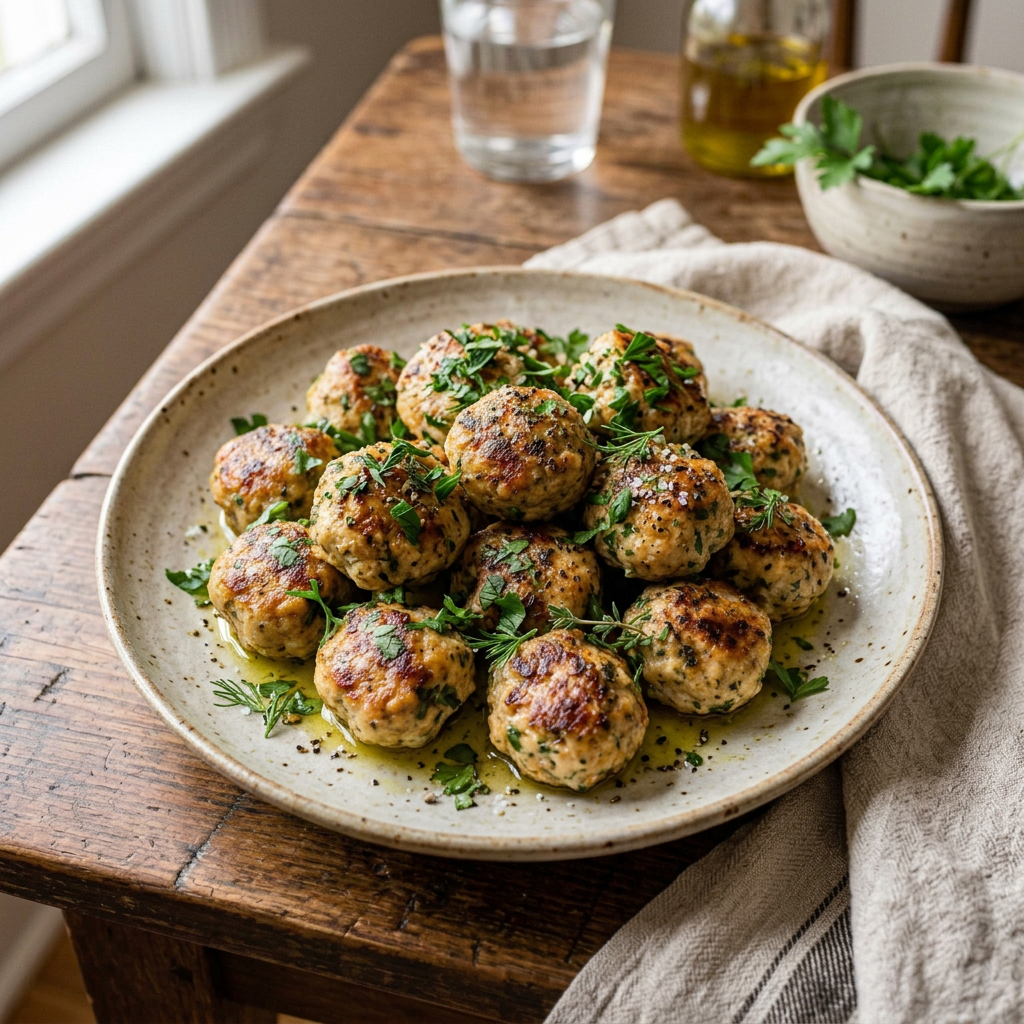
Chicken meatballs transform everyday chicken into bite-sized joys—tender, herby, and ready to party on your plate. These little wonders play well with many partners: toss with pasta and marinara for a cozy classic, tuck into a warm pita with tzatziki and crunchy salad for a Mediterranean vibe, or pile over rice with steamed greens for an Asian-inspired bowl. They even brighten homemade vegetable soup—moist and marvelous compared with dry shredded chicken. Packed with protein and pleasantly filling, chicken meatballs make mealtimes fun and satisfying.
Ingredients
1 16-ounce package of Ground Chicken
½ cup Panko Breadcrumbs
1 egg
1/3 cup of grated Parmesan and Romano cheese
2 garlic cloves, minced or pressed
2 tablespoons of fresh parsley, minced
1 teaspoon sea salt
¼ teaspoon of black pepper
¼ teaspoon oregano
¼ teaspoon thyme
½ teaspoon garlic powder
1 tablespoon olive oil
Process
Preheat oven to 400°F.
Line a baking sheet with aluminum foil and spray with cooking spray.
In a large bowl, beat egg with a tablespoon of water; add the breadcrumbs. Mix until breadcrumbs become moistened.
Combine cheese, garlic cloves, parsley, salt, black pepper, oregano, thyme, garlic powder, and olive oil with the breadcrumb mixture until evenly blended.
Combine ground chicken gently with a fork or clean hand; mix until just combined. Avoid overmixing to prevent the chicken from becoming tough.
Form 1” balls with a cookie scoop and place on the prepared baking sheet.
Bake meatballs for 20 minutes in a preheated oven, or until internal temperature reaches 165°F using an instant-read thermometer.
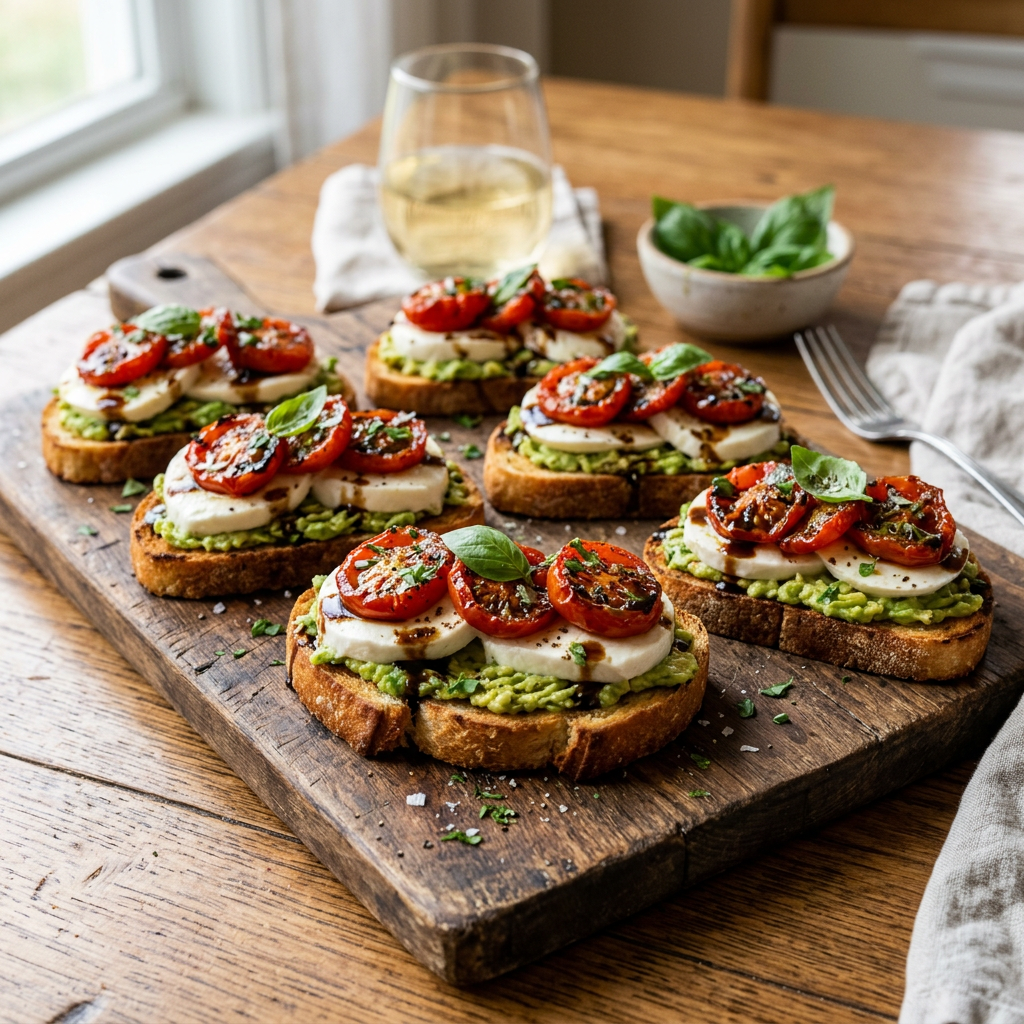
Delicious avocado toast topped with fresh mozzarella, roasted cherry tomatoes, and basil leaves
Imagine tiny flavor explosions on toast: ripe avocado, mashed with a spritz of lemon or lime, a slick of olive oil, and a pinch of salt becomes a silky, zesty base that plays off bright roasted tomatoes. Thin slices of fresh mozzarella tuck in atop the warm crostini, softening and stretching slightly from the toast’s heat to add a gentle milky hug. To assemble, smear the avocado over each piece of toast, plop on a spoonful of juicy roasted tomatoes, and nestle a few mozzarella slices on top. Scatter chopped basil like confetti and finish with a playful drizzle of balsamic reduction or extra-virgin olive oil. The bite delivers delightful contrasts: crackly bread, creamy avocado, tangy-sweet tomato, and pillowy mozzarella. These crostini are perfect for kicking off a relaxed gathering, stealing the show at a dinner party, or bringing cheerful flair to any antipasti spread. All recipes for Kitchen Moxy can be found at www.kitchenmoxy.com
1 clove of garlic, sliced in half; press or grate one half
8 ounces fresh mozzarella cheese, cut into 8 thin slices
1 large avocado, halved, pitted, and mashed
1 teaspoon of fresh lemon juice
1 teaspoon dried oregano
¼ cup roughly chopped fresh basil
1 pinch flaked sea salt
Process
Heat the butter in a large skillet over medium heat. Add bread slices to the skillet, in batches if necessary; cook until crisp and golden in places, 2 to 3 minutes per side.
Transfer crostini to a work surface; rub garlic half on each slice. Sprinkle with a pinch of dried oregano.
Mash avocado with grated garlic, a teaspoon of lemon juice, and 1 tablespoon of olive oil. Spread one scoop on top of each crostini.
Top each crostini with mozzarella, a roasted tomato slice, and a basil leaf. Drizzle with 1 tablespoon olive oil and sprinkle with flaky salt.
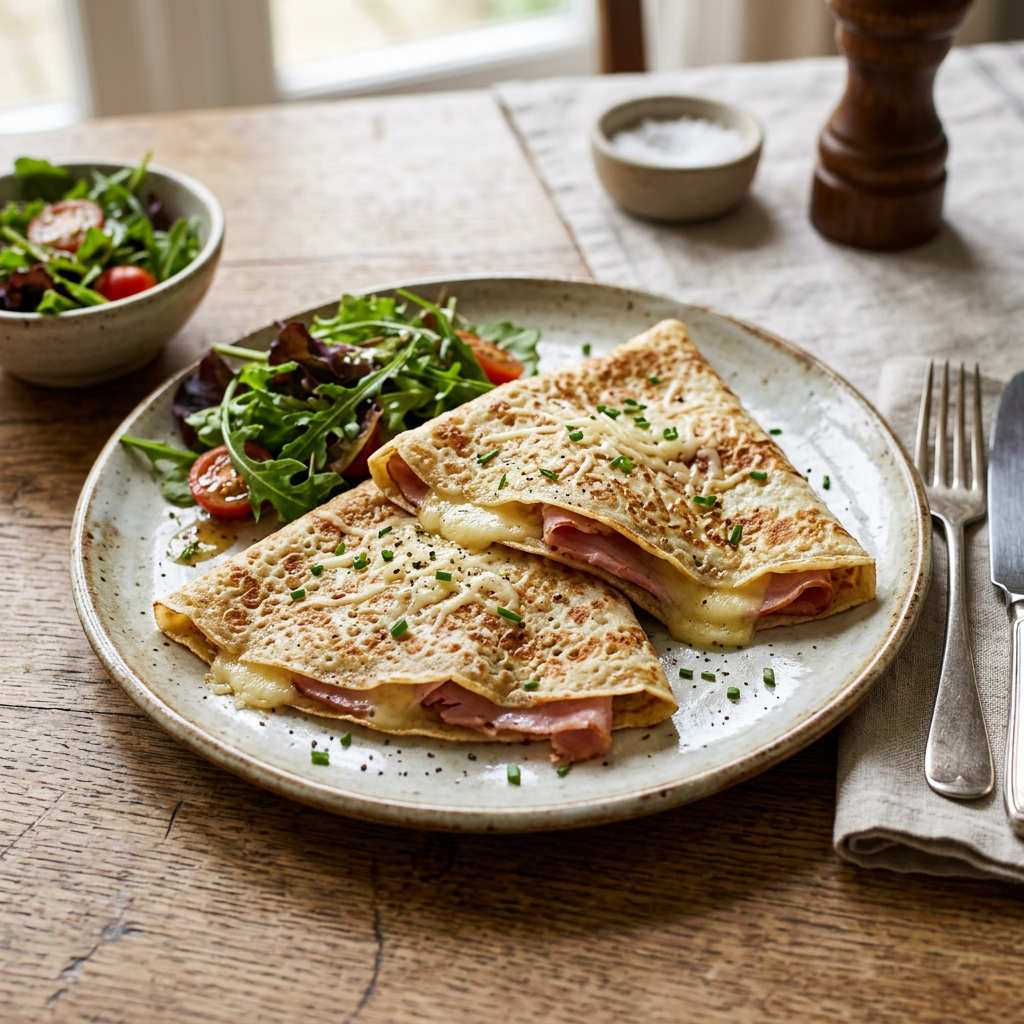
Delicious ham and cheese crepes served with a fresh mixed salad
Ham and Cheese Crêpes deliver a timeless blend of savory comfort and elegant simplicity. Thin, delicate crêpes cradle slices of savory ham and melted cheese, creating a warm, satisfying bite that balances tenderness and a slight crisp at the edges. These crepes are versatile: served for a leisurely brunch with a crisp green salad, paired with Dijon mustard or a drizzle of creamy béchamel for extra richness, or enjoyed as a quick weekday meal with a side of pickles or lightly dressed arugula. Garnish options like chopped chives, a grind of black pepper, or a scattering of fresh herbs bring freshness and visual appeal. For a gourmet touch, use aged Gruyère or Comté for nuttier notes, or choose a mild Swiss or cheddar for a family-friendly version. All recipes from Kitchen Moxy can be found at www.kitchenmoxy.com
Ingredients
1 teaspoon butter
1 medium onion, thinly sliced
2 teaspoons butter, divided, or more as needed
2 tablespoons Dijon mustard
10 slices thinly sliced ham
8 ounces shredded Gruyère cheese
Process
Prepare basic crêpe recipe at least an hour before making crêpes in a non-stick skillet.
Heat 1 teaspoon butter in a skillet over medium heat. Cook onions, stirring occasionally, until they start to turn golden brown, about 5 minutes. Set aside.
Assemble crêpes one at a time, spread mustard over one half, then top with 1 slice of ham, some sautéed onion, and Gruyère cheese.
Fold the crêpe over the filling, press gently, and heat briefly just until the cheese begins to melt. Fold in half again so each finished crêpe is about one-quarter the size of the original.
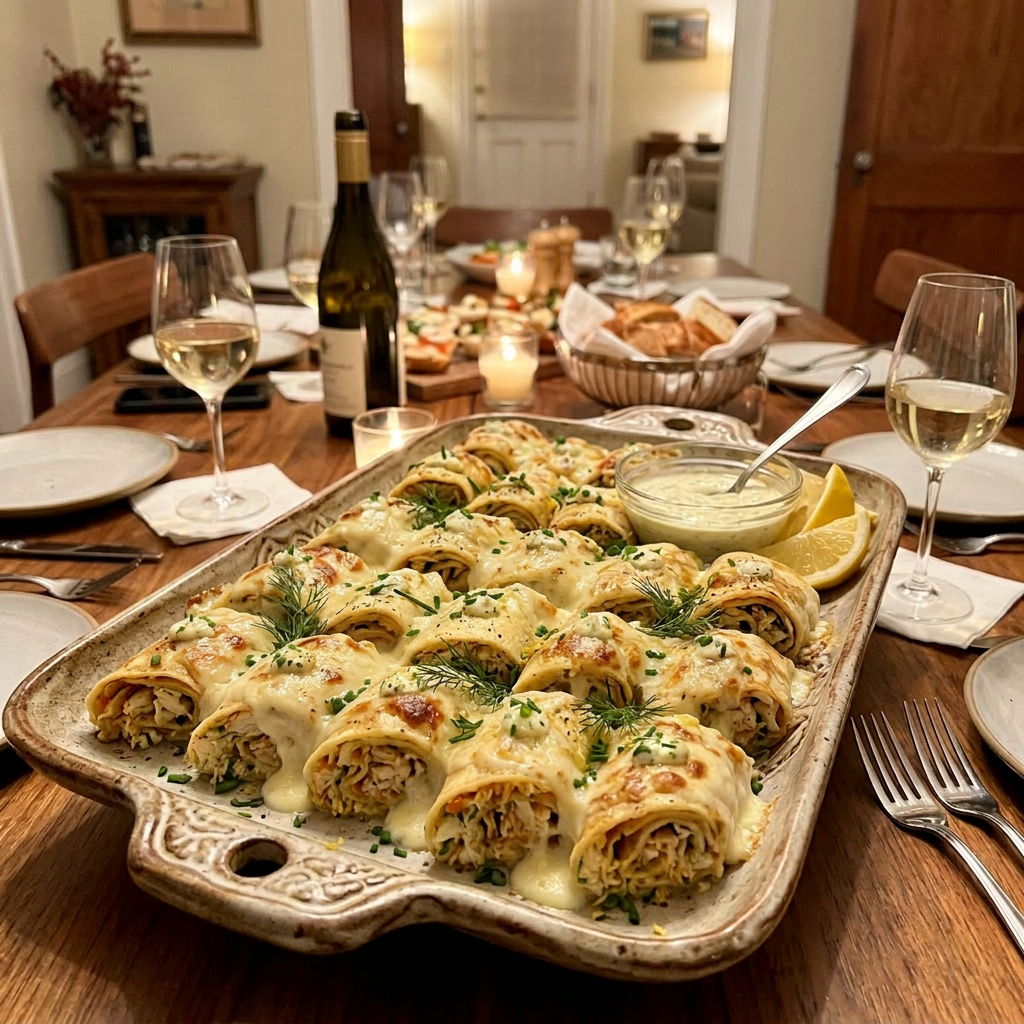
Savory-filled crepes turn any party into a deliciously playful event. Thin, tender crepes become tasty little parcels that hide creamy, flavorful fillings—think bright crab or seasoned chicken—ready to surprise and delight guests. Each bite offers a fun mix of textures: silky seafood or savory poultry, smooth binding sauce, and the gentle chew of the crepe, creating an indulgent yet light mouthful.
These crepes are perfect for entertaining because they’re elegant without being fussy. Arrange them on a platter for guests to graze. Dress them up with zesty citrus drizzles, a dot of crème fraîche, or a glossy beurre Blanc, and top with microgreens for a pop of color and flair. Pair with crisp white wines like Sauvignon Blanc, a delicate Chardonnay, or a lively sparkling wine to brighten the flavors.
Whether you aim for chic sophistication or relaxed charm, savory-filled crepes make a memorable, crowd-pleasing addition to any celebration.
Ingredients
Use 1 pound crab meat (drained) or 2 cooked, shredded chicken breasts.
Prepare basic crêpe recipe at least an hour before making crêpes in a non-stick skillet.
Sauté onions, mushrooms, and bell pepper in 4 tablespoons of butter until soft.
Add the crab, or chicken if using, and stir over low heat. Add the cooking sherry, turn the heat up to medium-high, and bring to a boil.
Boil until the sherry has evaporated, about 2 – 3 minutes. Drain any remaining butter from the pan.
Beat egg yolks in a bowl. Set aside.
In a medium saucepan, melt 4 tablespoons butter. Stir in flour, then add milk all at once over medium heat. Stir constantly until mixture thickens. Season with salt and pepper to taste.
Beat about 1/4 cup of the hot flour mixture into the egg yolks to temper them, then stir the yolk mixture back into the remaining flour mixture. Reduce the heat and cook for one minute, stirring constantly until slightly thickened.
Add ½ cup of Swiss cheese, stirring until melted.
Stir about 2/3 of the sauce into the crab or chicken filling until combined; set the remaining sauce aside.
Place a generous scoop of crab or chicken filling on each crepe, then roll the crepe closed.
Arrange crepes in a baking dish. Pour remaining sauce evenly over them and sprinkle with the remaining cheese before baking.
Bake for 20 minutes until hot.
Variations
Smoked salmon and dill
Sautéed mushrooms and goat cheese
Notes
Crêpes can be prepared ahead for a party. Freeze unbaked crêpes on a tray. When needed, thaw them in the refrigerator and then bake as directed.
Chicken saltimbocca dances between rustic charm and joyful indulgence. Imagine feather-thin chicken cutlets cloaked in salty prosciutto and studded with bright sage, sizzling in butter or olive oil until edges crisp and aromas pop. A cheeky splash of dry white wine or a spritz of lemon lifts pan juices into a glossy, lively sauce that winks at your taste buds without stealing the show. Each bite delivers contrast: the prosciutto’s savory-sweet snap, the sage’s herbal pep, and chicken so tender it practically sighs. Textures play together—crisp, juicy, and silky—making every forkful a little celebration of simple, spirited cooking.
Ingredients
Serves 4
2 boneless, skinless large chicken breasts, butterflied and pounded to ¼-inch thickness
Salt and freshly ground black pepper
4 fresh sage leaves
4 thin slices of prosciutto
¼ cup all-purpose flour for dredging
2 tablespoons extra-virgin olive oil
2 tablespoons unsalted butter
¼ cup dry white wine (e.g., Sauvignon Blanc or Pinot Grigio)
½ cup chicken stock (low sodium)
Optional: parsley, fresh lemon juice, or cream for finishing the sauce
Process
To prepare the chicken, slice chicken breasts horizontally into thin cutlets. Pound between wax paper to a uniform thickness and pat dry. Season both sides with salt and pepper.
Place a slice of prosciutto on the cutlet, then a sage leaf, and secure with a wooden toothpick. Dredge the plain side in flour, shaking off excess.
3. Heat 1 tablespoon olive oil and 1 tablespoon butter in a skillet over medium heat. Place the chicken, prosciutto, and sage, side down, and sear for 2–3 minutes, until golden. Turn the chicken and cook 2–3 more minutes, until the internal temperature reaches 165°F (74°C). Remove from the skillet and keep warm.
Deglaze the pan with white wine, scraping up browned bits. Add chicken stock and simmer until reduced, about 5 minutes. Remove from heat and swirl in remaining butter (and optional lemon juice or cream) to create a silky sauce.
Return chicken to the pan briefly to coat with sauce. Serve immediately with the prosciutto and sage side up, and remove the toothpick. Spoon sauce over the top. Garnish with parsley.
Notes
Use thin chicken cutlets for quick, even cooking.
Fresh sage is essential for authentic flavor.
Prosciutto can be substituted with pancetta if desired.
For a richer sauce, add a splash of cream or a small amount of butter at the end.
Serve with roasted vegetables, creamy polenta, pasta, or a light salad to balance the richness.
Chicken saltimbocca can be prepped ahead by layering chicken, prosciutto, and sage, then refrigerating until ready to cook.
This dish is elegant yet quick, typically ready in 20–30 minutes, and delivers a restaurant-quality Italian flavor at home
How to Butterfly a Chicken Breast:
If the chicken breast has skin attached, loosen it with your fingers and remove.
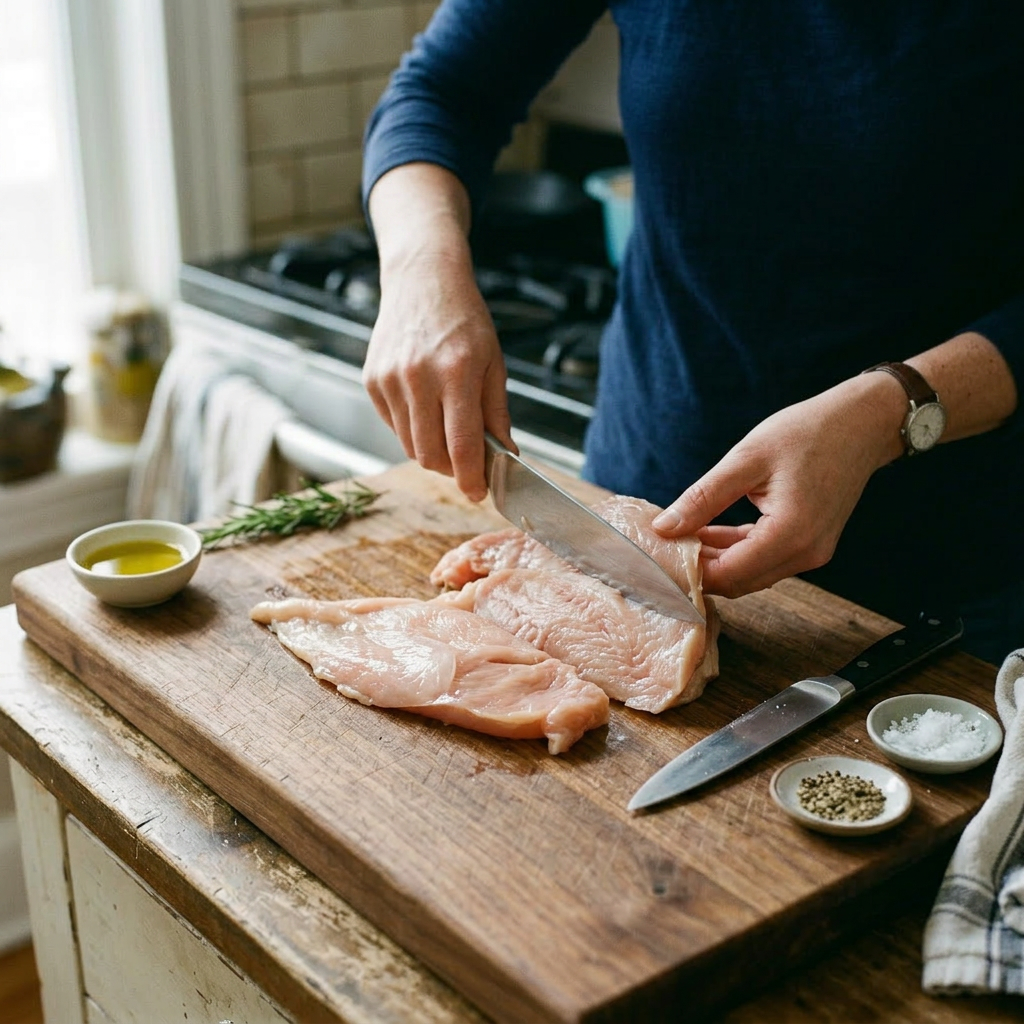
Place the chicken breast on the cutting board. Place one hand on the chicken breast, curving your fingers up slightly for safety. Insert the knife into the middle of the thickest part and cut horizontally; cut almost to the other side. Open it like a book.
Step-by-step guide to butterfly and flatten a chicken breast for cooking.
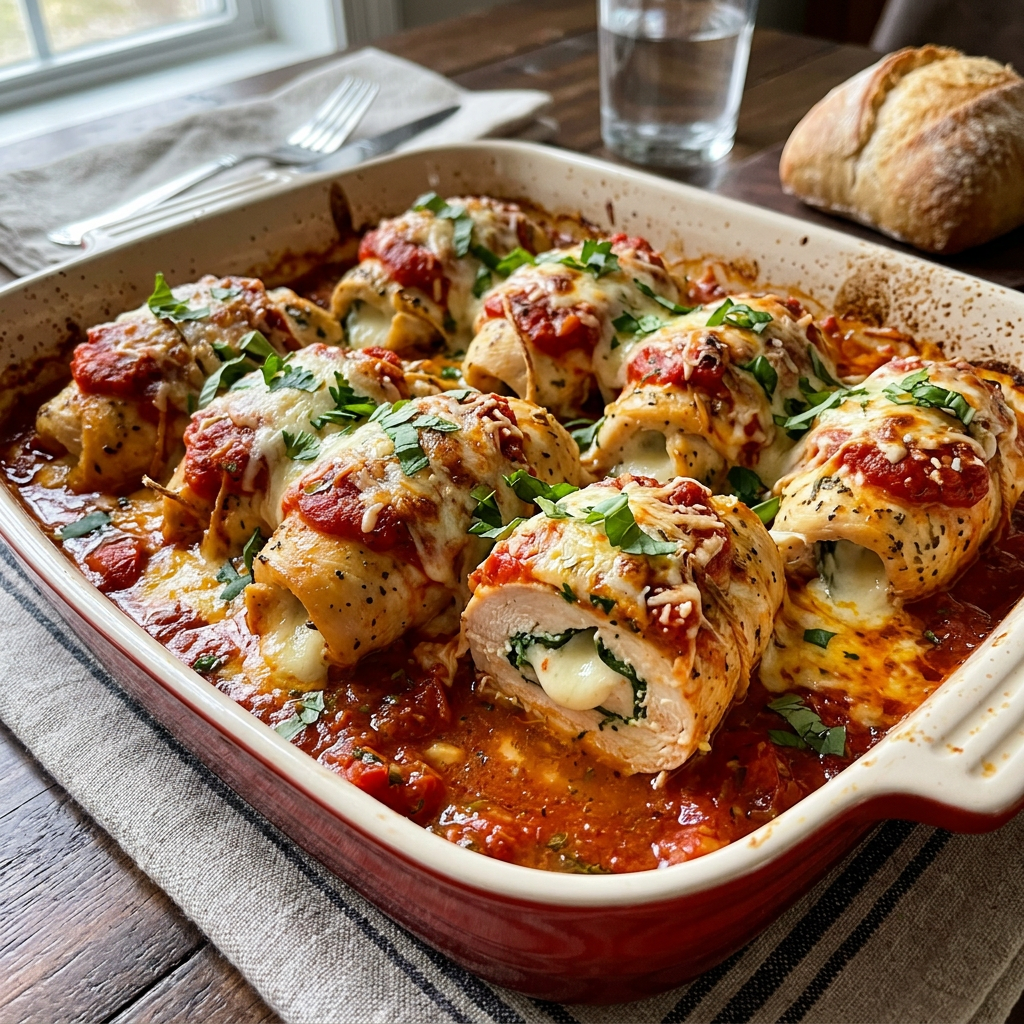
These cheese-stuffed chicken rolls are a harmonious blend of tender poultry, melted cheese, and bright tomato sauce. Boneless chicken breasts are carefully pounded thin, layered with fresh spinach leaves and a flavorful cheese filling for savory depth—then rolled tightly, secured, and lightly seared to develop color. The rolls finish in a simple tomato sauce made from ripe tomatoes, garlic, olive oil, and fresh herbs, which infuses the chicken with acidity and aromatic complexity as it simmers.
The contrast between the golden exterior and the molten, gooey interior is what makes this dish especially appealing. Each slice reveals a ribbon of cheese that complements the juicy chicken, while the tomato sauce cuts through the richness, adding brightness and moisture. Texturally, the dish balances tender meat, silky cheese, and a velvety sauce, making it satisfying and approachable. Serve with any pasta or polenta.
Ingredients:
1 can of Italian plum tomatoes, drain the sauce into a cup, and chop the tomatoes
1 small can of tomato sauce
2 garlic cloves, grated or pressed
1 green bell pepper, finely chopped
1 medium onion, finely chopped
¼ teaspoon dried oregano
¼ teaspoon freshly ground pepper
4 skinless, large boneless chicken breasts
2 cups of fresh spinach leaves
1 egg, beaten
½ cup ricotta cheese
1 cup grated mozzarella cheese
2 tablespoons grated Parmesan cheese
2 tablespoons chopped fresh parsley
Process
Preheat oven to 350° F.
Combine the tomato sauce and the liquid from the canned tomatoes until you have ½ cup.
In a medium saucepan, combine tomatoes, tomato sauce, garlic, bell pepper, onion, oregano, and pepper. Bring to a boil, reduce the heat, and simmer for 15 minutes – stirring occasionally.
Butterfly each chicken breast and pound between two pieces of wax paper to ¼ inch thickness (see Note)
In a small bowl, beat the egg, then blend in Ricotta, Parmesan cheese, ½ cup of mozzarella cheese, and parsley.
Place fresh spinach leaves onto each flattened chicken breast. Spread 2 tablespoons of the filling over each piece, roll the chicken tightly, and secure with a toothpick or kitchen twine.
Sear each chicken breast in 1 tablespoon of olive oil over medium-high heat until browned on both sides.
Spoon half the tomato sauce into an 8-inch square baking dish. Arrange chicken rolls in the baking dish. Pour remaining sauce over chicken. Sprinkle the remaining mozzarella cheese on top. Bake for 40 minutes or until an instant-read thermometer reads 165°F.
Notes:
The culinary term “to butterfly” means splitting a food, almost—but not completely—through. It’s a technique used for everything from shrimp to turkey breast. The two halves are then opened so they resemble a butterfly. With a chicken breast, it’s more like cutting the chicken breast horizontally so it opens up like a book.
How to Butterfly a Chicken Breast:
If the chicken breast has skin attached, loosen it with your fingers and remove.
Place the chicken breast on the cutting board. Place one hand on the chicken breast, curving your fingers up slightly for safety. Insert the knife into the middle of the thickest part and cut horizontally; cut almost to the other side. Open it like a book.